Ideas, Opinions, Trends, Markets, Thoughts, Technologies, Outsourcing, India & The Flat World

Contact

Contact Me:
sadagopan@gmail.com

Linkedin Facebook Twitter Google Profile

Search


wwwThis Blog

Archives

Resources

Labels

  • Creative Commons License
  • This page is powered by Blogger. Isn't yours?
Enter your email address below to subscribe to this Blog !


powered by Bloglet
online
Technology Blogs by Indian Bloggers

Saturday, December 31, 2005

Online Intersections With Traditional Media

USA Today ran a story about U.S. music album sales. Get this: 2005 album sales were down 7% from the previous year while digital downloads of music doubled! U.S. album sales were down about 7% as 2005 drew to a close, but the budding market for music downloads, which more than doubled over last year, helped narrow the revenue gap. The article goes on to note that this isn’t particularly bad news for recording companies, but “it doesn’t bode well for music retailers.” Combined, album and singles sales fell about 8% over the same time last year. More than 95% of music is sold in CD format. Downloaded tracks from online retailers soared to 332.7 million this year, compared with 134.2 million in 2004, an increase of 148%. Download sales increased by 350% over the prior year. Michael Hyatt predicts, a big enough slice of the book reading public will opt for digital delivery and that will have a significant, disruptive effect on the entire industry. As he sees it, 5-10 percent reduction in sales would wreak havoc. It’s already happening with newspapers and magazines. On the other hand, publishing companies that anticipate this shift and prepare accordingly will prosper.He is spot on when he sees that when technology shifts happen – quality does not matter beyond a certain level - The quality of MP3 files is not as good as the quality of CD tracks. Yet, customers are switching in unprecedented numbers. The trend of having 10,000 songs at your fingertips in a device that can fit in your pocket is intoxicating—at least to millions of people.
Apple has 84% of the legal download market and has sold 600 million songs to-date and has more than 10 million customers. If we look at the publishing industry as Michael sees it – may not portend the death of traditional book publishing, but it will mean a significant shift, perhaps a seismic shift. But this calls for a radically different business model for book publishers. Like the USA today combining e-newsroom and print media. I hold a slightly different view in respect of online presence for major media - online presence advances easy reach and more sales - numerous studies suggest that several consumers look at websites - before making the actual purchase either online or offline. Recenty Dow Jones announced more profits from online compared to traditional media(This in my opinion reflects two things: Online making traditional media reach to larger people and rise of online world can't be resisted - better embrace it -Indications are that combined strength of both online and offline readership of WSJ is larger than traditional print media readership).Retailers can definitely experience that buyers of all trendy and unique things surf online, do their research before any purchase - In the online world through comparison shopping, targetted advertising, promotional schemes, personalisation and preference patterns all provide unique value that can potentially drive offline sale as well quite significantly. Add mobile technologies and online world - the combination can really create deep impact in the offline world.


Category : , ,
|

Steve McConnell : Good Read

Steve McConnell is one of my all time favourites – in fact he distills rich experience into very well articulated set of advise – I keep telling all software developers that all Steve McConnell’s writings are a must read – I think that he has the right flavour and mix in discussing various software engineering concepts – all embellished in simple, direct and practical terms. So when I came across the online version of his classic mistakes enumerated, I can not resist making mention about it here. Here are some types of the 36 classic mistakes that McConnell describes in detail:

- People Related Mistakes
- Heroics
- Adding people to a late project
- Politics placed over substance (etc.)

- Process Related Mistakes
- Abandonment of planning under pressure
- Planning to catch up later
- "Code-like-hell" programming (etc.)

- Technology Related Mistakes
- Silver-Bullet syndrome
- Overestimating savings from new tools or methods
- Switching tools in the middle of a project (etc.)

With most of the professional service enterprises scaling up very aggressively and with the average experience coming down, the writings and experience of the likes of Steve Mcconnell are highly relevant. A must read for all interested in software development.


Category :
|

Web 2.0 : Time For A Reality Check

Web 2.0 is clearly getting disproportionate coverage in the blogosphere. Web2.0 share in the real world as delivering value to business and society is indeed limited - if we look at the enterprise software – they directly are responsible for making the business machines hum and improve- be it airline scheduling, dispatching crude oil or treasury management or powering the stock exchanges of the world. Mike Arrington lists out a set of Web 2.0 applications that he sees as quite essential – the list has within it - some well known names – Technorati,FeedBurner, Bloglines, Flickr, Memeorandum, del.icio.us, skype & WordPress etc. The enthusiasm and the excitement shown for Web 2.0 apps amazes me – as these defy long held priniciples of wisdom. Its high time that these so called Web 2.0 companies are examined from the first principles viz. Business models – merely becoming attractive to be bought over by Yahoo’s & Google’s of the world would not be sufficient. If you see closely even the valuations of bought out firms have been very moderate.No doubt advances in technology to develop and distributed services off the web is an important landmark – most of Web 2.0 apps germinate out of this. The reigning mantra seems to be - "build it first and figure out how to attract visitors – they will anyway come” business model – the underpinning hope is that once a critical mass of visitors are achieved, revenues can always be generated. AdSense funds the operational cost of several web 2.0 enterprises. Surely not the way to build a scalable & enduring business . I sort of agree with the view web 2.0 lacks meaning & magic. I am fine with already established players like Amazon & Google getting web2.0 tagged – am also fine with finding a productive niche to thrive in the information value chain. Moving forward like in the e-business space, we need to have the wisdom and mechanisms for cross-integrating/leveraging web 2.0 applications for larger benefits – this calls for standards in development , build & integration blocks – all this would come only out of a solid base of web 2.0 apps that get built beneath – truly a tall order given the fragile nature of several web2.0 entities. We can definitely see a petering out of the web 2.0 momentum as we see it now and several entities would disappear – but one hope is that out of this something robust and strong might emerge – but we have cut through the hype.


Category :, ,
|

Offshoring IT Services : Signals Getting Stronger

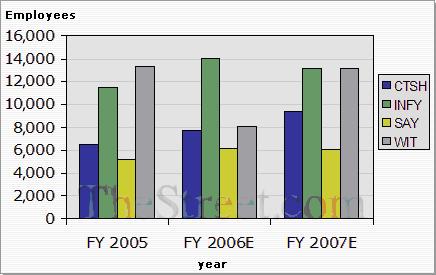
Ronna Abramson finds that an increasingly huge pool of global demand makes it a good bet for India's top IT outsourcing firms to outrun their larger rivals in 2006. The year ending Mar 2006 will mark a milestone for Indian offshore outsourcing firms - Infosys and Wipro, as their revenue crosses the $2 billion mark. Satyam has already crossed the billion dollar run rate this year. Ronna finds that the streak will continue in part because Indian firms have just scratched the surface of potential demand. The statistics related to offshore outsourcing makes an interesting reading.
Goldman Sachs estimates suggest that the offshore model has penetrated less than 10% of Global 500 IT budgets for core application maintenance and development work and as the Indian companies are expanding into new areas such as network and data-center management, consulting, and business process outsourcing of such departments as human resources and accounting. As far the multinationals leveraging offshore, analysts widely believe there's so much offshore opportunity that the multinationals will have little effect on Indian firms' revenue.The growth may hinge upon the ability to attract talent. Richard Schroth, a senior fellow with Katzenbach Partners, also believes that the multinationals already have so many moving parts that adding offshoring to the mix is likely to be challenging. I earlier wrote about this - you can find them here, here, here and here.
And the multinationals still have far fewer employees in India than do the local companies. Offshore has fully moved into the mainstream from the demand, as well as delivery capability perspective and demand will likely remain very robust.Goldman Sachs has done an assessment of India's Net Workforce Growth - worth a close reading.Clearly , one can look to India to continue to remain the sweet spot of offshoring. The recently released Mckinsey -Nasscom report puts it so succintly: In the next five years, Indian IT services shall generate US$60 billion in revenue and perhaps sustain 9 million jobs and adds in terms of importance -like oil for saudi, cars for japan, services could be of such importance to india. Now many ask me how to differentiate the offshore majors( remember the core focus area amongst offshore players may vary) based on these data – all other things being equal – look at the data with this perspective:
- Long-term: Head count growth correlates 90% to 95% revenue growth (factor average pricing and pricing trends as relevant)
- Short-term: Utilization drives revenue and margin
- Operating margins seldom change drastically once stabilized.
- Look at EBITA margin & AR numbers & their correlation.
- The crucial differentiation would be Human resources and depth of talent – including attrition and lateral recruitment efficiencies
- Always ask for the depth of talent – for eg- ask for average years of experience with the organization and also ask for average experience of consultants in the IT industry – I suspect that surprisingly in most cases both are going downwards – not a healthy trend though
- Assess sensitivity for revenue mix shifts

(Image Courtesy : Thestreet.com/Goldman Sachs research)

Category :,

|

Friday, December 30, 2005

The Fortune 500 Blogging Index

Chris Anderson writes about a wiki created collaboratively developed together by between Socialtext & Wired magazine that tracks which of the Fortune 500 is blogging. The list finds that only 3% of the F500 are doing so. Microsoft blogs, and Apple doesn't. Sun blogs and Intel doesn't. GM blogs and Toyota doesn't. In a meeting with Doc.Searls the question arose and Chris writes in the eyes of Doc - the risks and uncertainties of public business blogging are so great that big companies only do it under duress, when their traditional corporate messaging has lost traction. So companies on the way up don't want to mess with their success by introducing a new lens on the enterprise that isn't controlled by the PR department. But companies on the way down are willing to try anything to regain the confidence of their customers.This site has a list of F500 companies with blogs – both internal and external are listed here. The NewPRwiki also has a list of CEO blogs. This spreadsheet lists the Fortune 500 blogs & he finds that the average trailing 12-month share performance of the blogging members was +5.7%, while the non-blogging members was +19%. A commendable effort in compiling the list. This Fortune 500 Business Blogging Wikiis created to expand the list. Somehow I could not find in the excel sheet - noteworthy IBM blogs from the likes of Irving Wladawsky-Berger, Amy Wohl, Grady Booch and countless others from the IBM stable.what may be seen as extending things too far, Chris says the idea is to make the list robust enough to create a business blogging index!!!


Category :,
|

Morgan Stanley on Outlook for India -2006

While it is fashionable to be bullish about the growth of Key countries in Asia, Morgan Stanley takes a cautious view about the outlook for India in 2006. An acceleration in GDP growth over the last two years to 7% pa has been one of the key factors focusing investors’ attention on India. Although we have been positive on India’s long-term growth outlook, we believe that the recent acceleration in growth was driven largely by cyclical external stimulus. Given that these favourable global factors now appear to be reversing, we believe India will face a pullback over the next 12 months in the form of a slowdown in growth and tightening liquidity conditions. A large part of the recent growth in industrial production and to a lesser extent services sector growth has been driven by cyclical global factors. This strong global liquidity spillover into India has allowed the government to pursue relatively loose monetary and fiscal policy, pushing domestic consumption growth to a new high. Acceleration in consumption growth has largely been driven by a rise in borrowing rather than income growth. India’s share of goods exports to the US has not seen any significant improvement over the past two years, and therefore most of the acceleration in India’s export growth appears to be largely a reflection of the demand cycle - this is important as asian economies are in general dependent on exports to US.The report also says china is about to suffer from an export fatigue. Although the Indian economy continues to benefit from relatively low global interest rates and stronger global GDP growth, the government has cushioned the economy from the attendant cost of higher oil prices.


Category :,
|

Enterprise Predictions for 2006

These are the comments that I posted in Vinnie’s site upon seeing his 2006 enterprise software predictions. In general, buyers are more cautious and would not easily get sucked in vendor speak – lot more detailed evaluations and price negotiations, clarifications can be expected – the average sales cycle may also increase for enterprise players – not shorten as expected due to consolidation effects.
Point 1 – Agreed on the marketing fronts– But I expect a much more renewed aggression from SAP in the marketplace and Oracle sharpening its focus given that the whole world is looking at how they are going to move forward – I believe that both SAP & Oracle shall be forced talk more about architecture in the new year – Agreed Oracle’s emphasis could be a heard more. In fact I expect Web Services/SOA to get more pronounced inside enterprises – agreed that these need not be just centered on SAP/Oracle.
Point II – Integration of RFID,RSS & GPS would certainly happen – but not sure if we shall see Ver 2.0 now – the fatigue of enterprise s/w overspend is still felt by CIO’s at all levels.
Point 111- Fully agreed- BPO shall see more and more push . Already financial services are beginning to look at leveraging social networking media aggressively
Point IV – Not sure – may not happen that fast – not in 2006
Point V – Agreed – we shall see the re-emergence of small super specialists – The world would see more of the E2opens and likewise new model consulting & service firms.
Point VI – Fully agreed – If I may add customers would begin to demand the benefits of offshoring /global delivery that these yesteryear big guys so eloquently talk about. Indian headquartered vendors would be moving/growing faster then ever into newer arenas. here as well.

On the rest of the points : China would see more of global / Indian HQ big players leveraging it for supply – but volume growth may just be gradual – am skeptical about chinese service firms making acquisitions oversees and growing – certainly not in 2006. On SaaS – I find that the vendor offerings would improve –the movement has succeeded in creating mindshare amongst buyers - now it the time for the SaaS players to step up aggression – many of them have not scaled up in terms of their reach and may need to be step up engineering and sales efforts much more significantly to tap the opportunity. Storage management, asset digitization would see lot more spend in 2006. Compliance management and benefits are getting debated already – but are bound to become more shrill – with so much money going in there – Surprising that enterprise vendors and service firms are not visibly lobbying for its continuation/making it more tight – given that they are the best beneficiaries of this. I also see the consolidation efforts amongst small software product players ( some of them walking dead) continuing to happen in the new year and some consolidation happening in the mid to tail of the Indian headquartered offshore service vendors and small product vendors leveraging offshore lot more aggressively for engineering works. New technology absorption/offerings in the enterprise space shall continue to be felt at the small product player levels before the big guys begin to embrace- to that extent the ecosystem shall remain vibrant. You can see the comments here.
I would like to add a few more things related to the post here:
A. The big guys would also be pressurized to share the price benefits of engineering getting offshored and I expect atleast one major announcement of support price coming down due to offshoring.
B. We shall see the enterprise guys making investments/acquisitions in new age technologies like RFID – The SME market segment opening up shall see a new equation emerging in the enterprise space – the traditional No.1 /No.2 may not necessarily hold good.
C. I also see that the best-of-breed vendors talking a decisive position in terms of offshoring most of their engineering or close to near full co-option of India HQ service firm consultants masking as their PS arm.
D. I see greater adoption of BPM solutions amongst large and medium enteprises.
D. I anticipate far more adoption of web services and SOA in the new year - not necessarily centered on offerings from establiched players
.


Category :
|

Alaska Airlines #536 - Anxious Moments

Jeremy Hermanns, a passenger in the Alaska airlines flight bound for Burbank, and a GA-VFR pilot, writes about the Alaska Airlines cabin depressurization and panic at 30000 feet. Seattlepi reports that an aviation expert finds that the jet was probably struck by a baggage cart while at Sea-Tac and the incident was not reported before the plane took off for Burbank. The damaged area of the plane would have been weakened by the ramp incident and the aluminum skin then likely ruptured once the jet neared its cruising altitude. All this happened due to a non-unionised member probably damaging the fuselage!. Oh God.. Now I realize how valuable the words - "travel safely" and "happy landing" means. I did not see any press release in Alaska airlines website on this incident. Look at the saftey numbers and also this impressive document on safety fromBoeing.Also good to know that no one was injured in this - aviation safety, is in many ways an important driver for global economic engine to keep humming - the more and more that we can make it safe - all the more better.


Category :
|

Thursday, December 29, 2005

Microsoft : Looming Challenges Ahead

While some beleive that Micosoft shall have a good year ahead, Ray Ozzie's perspective about what microsoft could be doing in the year ahead - there are some important area where Microsoft's progress shall be monitored in the coming year.This list provides a good summary of key themes that Microsoft needs to go after in the new year.Besides taking Vista to the boardroom- microsoft needs refresh its online strategy. Itslatest online strategy is to match Google’s every move in hopes of raking in more advertising dollars, while taking yet another stab at subscription services. 2005 saw a lot of motion—leaked memos, blog buzz, reorgs, and a new "Live" brand—but little progress in terms of service improvements, audience share, or dollars. I agree that Microsoft’s online strategy must start to gel in 2006, or the company will find Google continuing to steal headlines and rake in the advertising bucks—or worse, building online services that begin to compete with Microsoft's core software franchises.


Category :
|

Korea & Convergence

Japan and Korea have always been the trendsetters in the mobile and convergence segments. Korea'sbroadband advances are amongst the most recognised about the nation. Courtesy of Smartmobs saw this assessment of the status of convergence in the Korean market. I had been to Korea several times and in many ways associated with several developments there – and it is interesting to note that indeed the telecom market was dominated by
developments related to digital convergence. Video-on-the-go services, dubbed digital multimedia broadcasting (DMB) as a cross between telecom and broadcasting, commercially debuted in May. Amongst the most notable initiatives include -landline access speed to a wireless terminal, pilot run of the broadband convergence network (BcN) project, an ultimate network integrating traditionally separated telecom, Internet and broadcasting pipelines, seamlessly switching over to a wired or wireless connection. BcN, which promises a speed of 100 megabits per second (Mbps), about 50 times faster than current broadband norm of 2 Mbps, has been touted as a mainstream network of the future. Satellite DMB, became popular this year - enabled by a signal beamed from satellite, lets folks on the road to enjoy crystal-clear video, theater-quality audio and data through in-car devices or handheld terminals like cell phones. IP TV has failed to be adopted,as in other parts of Asia and fixed-line telecom carriers are struggling to find the right time to market the futuristic services. today in the world - the number of mobile phones exceed the number of landline phones available- all this has happened in less than 15years –in korea, 80 % population are mobile subscribers as against 60% population subscribing to landline. Spurred by saturated local market, telecom operators are desperate for growth in digital convergence segments. Korea is all set to lead us into newer and newer developments in this convergence age.


Category :Convergence,
|

The Rise Of KPO

Several months back I wrote,Every form of digital data – creation, transformation and reporting is up for grabs in the offshoring world. Eric Keller was indeed right when he wrote, took Japan more than 30 years to obtain a strong position in key U.S. industries, such as Automotive and Consumer Electronics and that It will take half as long for India to do the same for service-oriented industries with IT leading the charge. Britton now writes, "Get Ready for Knowledge Process Outsourcing". As he sees it, the next wave of offshore outsourcing will revolve around high-end knowledge work. It may also have important implications for companies engaged in customer analysis and intelligence initiatives.
Different waves of outsourcing – from manufacturing to IT to business process have all been quite beneficial to business by and large and the upcoming trends is about knowledge process outsourcing (KPO) - outsourcing meets customer intelligence. KPO refers to knowledge-intensive work that involves specialized domain expertise. High value processes that fall into this realm: valuation; research; investment researches; patent filing; and legal and insurance claim analysis. That would certainly include customer analytics and related processes. Some see KPO business in industries such as pharma, biotech, management services, financial services, technology research, engineering. But other skills that are directly relevant to those engaged in customer intelligence work have been mentioned including financial analysis, data integration, and research and analytics.
As we echoed G.B.Prabhats's view,Across every industry spectrum, there is potential for knowledge work to relocate to India. In fact numerous studies/ discussions with industry CIO's have confirmed the firm arrival and growth of knowledge process outsourcing, A paper prepared by the Confederation of Indian Industry (CII) reveals that KPO would grow at 46% to reach a staggering US$ 17 billion by 2010. India’s transition from being a BPO destination to a KPO destination is imminent. The paper lists areas with significant potential for KPO include pharmaceuticals, biotechnology, and ICT, besides legal support, intellectual property research and design and development for automotive and aerospace industries. India stands to gain from its inherent strengths in the healthcare sector, pharmaceutical and biotech sector and ICT sector. India could emerge as a global KPO hub as the business requires specialized knowledge in respective verticals and the country's large number of engineering and technical institutes are geared to address the manpower demand. Clearly as in IT Outsourcing India is emerging the clear favourite here. India: The next knowledge superpower - Today & The Way Forward covered a widescope perspective about the readiness of the nation to offer such sophisticated services. New Scientist wrote sometime back ,there's a revolution afoot in India. Unlike any other developing nation, India is using brainpower rather than cheap physical labour or natural resources to leapfrog into the league of technologically advanced nations. Every high tech company, from Intel to Google, is coming to India to find innovators. But the revolution is not confined to IT. Crop scientists are passionately pursuing GM crops to help feed India's poor. Some intrepid molecular biologists are pioneering stem-cell cures for blindness,while others have beaten the odds to produce vaccines for pennies. From a beneficiary perspective, like early IT services offshoring inititors gained more through IT outsourcing, in KPO as well, early movers would stand to gain a lot more.


Category :
|

Wednesday, December 28, 2005

Portals To Choose Insurance Advisors

We have so far seen chat being used interactively for customer services - online customer interaction has never really gone beyond in a sustained way.Just as internet banking empowered customers online shopping experience, Insurance companies are trying to innovatively make use of the internet and collaborative platforms to provide better interaction experience with the customers. ING Vysya Life has borrowed the blogging concept to provide an online presence to its top insurance advisors who can use the portal to increase their strike rate for converting their business from a larger number of potential customers. The platform provides the prospective customers the facility to select from the 27 advisors in six cities featured on its Web site and interact with them to get comprehensive information on insurance products. The interactive service will not eliminate personal meeting to clinch the subscription but is aimed at helping in sharper advisory capabilities to target the right products to the right customers. ING maintains that this service could be scaled up globally if found successful. . This is quite noteworthy. I would typically like to see the kind of tracking that the fedex uses to trace status - ideally service companies should be in a position to track and expose progress of the movement within the department to let stakeholders know about the progress. This should happen eventually.

|

Paul Graham On Time Management & Procrastrination

Several people ask me repeatedly , how I manage things amidst so much of travel. I do not know whether I am all that good in managing things in time – most of my friends think that I can do better!! However I see some colleagues who do much better on this front – with so much travel they accomplish a lot more.Time management doesn't begin with managing time, it begins with finding our own individual purpose, establishing our mission, and setting our goals to achieve that mission. Paul Graham, points out that there are three variants of procrastination, depending on what you do instead of working on something: you could work on (a) nothing, (b) something less important, or (c) something more important. That last type, is good procrastination. Type-C procrastinators - put off working on small stuff to work on big stuff. Good procrastination is avoiding errands to do real work. The mildest seeming people, if they want to do real work, all have a certain degree of ruthlessness when it comes to avoiding errands. The reason it pays to put off even those errands is that real work needs two things errands don't: big chunks of time, and the right mood. If inspired by some project, it can be a net win to blow off everything else to work on this for the next few days to work on it. Yes, those errands may cost more time when you finally get around to them. But if a lot get done during those few days, you will be net more productive. In fact, it may not be a difference in degree, but a difference in kind. There may be types of work that can only be done in long, uninterrupted stretches, when inspiration hits, rather than dutifully in scheduled little slices. Conversely, forcing someone to perform errands synchronously is bound to limit their productivity. The cost of an interruption is not just the time it takes, but that it breaks the time on either side in half. Years back Steven covey’s book First things first defined a minor framework – to classify criticality of time management

1. Important and Urgent (crises, deadline-driven projects)
2. Important, Not Urgent (preparation, prevention, planning,
relationships)
3. Urgent, Not Important (interruptions, many pressing matters)
4. Not Urgent, Not Important (trivia, time wasters)

Paul’s advise is certainly good – “the way to "solve" the problem of procrastination is to let delight pull one instead of making a to-do list push thing. Work on an ambitious project that one really enjoys, and sail as close to the wind &leave the right things undone.


Category : ,
|

2005 : The Year Of Google

As the year comes to an end - amongst several enterprises that made news for the moves made - Google stands out - one gets a felling as if the year thats about to end should be christened THE YEAR OF GOOGLE.The Google of yesterday is different from the Google of today and with several new initiatives like this – and moreover there are several initiatives - some known, most unknown, the Google of tomorrow looks more interesting. Some see google as privacy time bomb, some see it as an evil and some hold even more radical views about Google. This post captures all the
acquisitions that Google has made in recent times.
Different people see google and its role in defferent ways. One perspective highlighted the role of Google as ultimate demand generator - saying Google is in the demand-generating business. It is essentially a sales channel to the Internet
. Google's purpose is not to get you to a website. It wants to get you to your solution. And along the way, it generates demand directly, using AdWords and Froogle, or indirectly, using AdSense. These very specialized actions prevent Google from being a portal. A perspective examined how Google could become as dominant as Walmart. Unarguably, Google has the best talent on OS on its rolls. Some see it as amongst the most innovative of all companies. FT names Google founders as men of the year-2005. Google is becoming almost synonymous with internet – watch all these acquisitions and make mental mash-ups of the intersections of these technologies coupled with advances in RFID,GPS, Wi-Fi could bring forth.


Category :,
|

Mark Fletcher, Bloglines & Blogworld

Mark Fletcher,who earlier wrote about his experience in starting Bloglines – one of the most notable success in the blogworld – real startup, garage mindset & launched with the philosophy to keep things simple but allow for scaleup is indeed a phenomenon in the blogosphere. His presentation on bloglines startup experience is a must read for all those interested in entrepreneurism and the evolution of the blogosphere. Mark and Bloglines are clrear trendsetters and consistent winners - even after Askjeeves acquisition,it is really an achievement of sorts to have retained the old look and feel and maintain the same user experience . Mark writes about his experience in moving bloglines infrastructure recently – aimed at moving the Bloglines service to the main Ask facility, as it would be easier for operations, it would be easier for to quickly expand in the future, and it would be easier to tie into other parts of Ask Jeeves.
Some peep into bloglines architecture : The Bloglines back-end consists of a number of logical databases. There's a database for user information, including what each user is subscribed to, what their password is, etc. There's also a database for feed information, containing things like the name of each feed, the description for each feed, etc. There are also several databases which track link and guid information along with the system that stores all the blog articles and related data. There are close to a trillion blog articles in the system, dating back to when we first went on-line in June, 2003. Even compressed, the blog articles consist of the largest chunk of data in the Bloglines system, by a large margin. It reckoned that during transfer the blog article data needed to be moved ahead of time, the other databases could be copied over in a reasonable amount of time, limiting our downtime to just a few hours. Blog articles are not stored using We traditional databases - a custom replication system based on flat files and smaller databases is employed as it works well and scales using cheap hardware. While big enterprises can afford to spend millions and millions to build, experiment and grow, what Bloglines has accomplished in large measure owing to Mark’s vision with limited budget but with better vision and neat execution, is really commendable. Bloglines is indeed a phenomenon.


Category :,
|

Tuesday, December 27, 2005

Indian IT Labour Shortage

A McKinsey -Nasscom study finds,If India doesn't take urgent action to reform education and build modern infrastructure, the nation could fall far short of its potential as an outsourcing haven. The first inklings of a tightening talent supply are already visible in rising staff turnover and skyrocketing wages. If offshore outsourcing work grows as rapidly as expected, the study predicts, in five years India will have a shortfall of 150,000 IT engineers and 350,000 business-process staff. Software houses shall have to face this problem in several ways - that may include leser margins as well.The problem is not non -fixable - with concerted efforts from Government, educational instituitions & corporates - Read the specific recommendations( thought they look geneic - the roots of the solutions anyway lay there) to overcome the shortfall and once can easily relate how this fully doable. Am uplodaing from airport and hence very brief - shall write on this is in detail a litte later


Category :
|

Open Source : Outstanding Issues Galore

Several months back,while writing a brief note, on opensource, I concluded that that from a technology, economic and sociological perspective, there is no compelling reason for the open source model to succeed and become dominant. We can assume at best - a niche role for open source in the IT industry. A few months later, I wrote opensource is not yet ready for the enterprise and pointed out that I tend to take a dim view of open source relevance - see Open source -where is the business model, Opensource : Costly & Litigatious and also covered Kim Polese view business models of the open source support companies – where the contours of what need to be done to support open source components become quite clear and a not seeing several players in the opensource world thinking along these lines – it would be a major impediment to consider adoption of opensource in enterprises if the support model is not made widely available and the economics and technology upgrade rate demonstrated as beneficial. I also recently wrote about FOSS movement winning the hearts & minds of the Indian programmer & highlighted the need to have a robust instituitional and infrastructural support for the movement to gain support from offshore developers. James McGovern is urging opensource analysts to provide details of talent search mechanisms, non-technology corporates interest in opensource, vertical solutions using opensource solutions, details of opensource competing and winning against commercial software, best practices in opensource contributions and the like. Look carefully at the set of issues that he has raised – very essential to build up any movement – daring to challenge well established notions of software – Like James , I shall await for pointed responses to these.( Disclosure – Have tried in the past – with limited/no success to get such specific, credible details).


Category :
|

Blogherald's Blogosphere Watch

Along with the observation that Time has dropped Blogs of the year award this time around, ( it is becoming a little difficult - we need to admit given the huge explosion of the blog population and the cacophony of voices and the various themes around which ideas are expressed.)Blogherals publishes the list of top ten interesting people in the blogosphere. Among the ten, I certainly find these four very interesting.

1.Matt Mullenweg, WordPress -The rising star of the blogosphere took a few blows from supposedly friendly folk this year, and yet bounced right back with the launch of a new company, and took the mantle of the blogosphere’s most popular DIY blogging script WordPress. This relaunch is taken very seriously by the Blogshere..
2. Jason Calacanis, Weblogs Inc., (AOL) - For legitimising the value of blogs as a serious and profitable media play by selling Weblogs Inc., for a rumored $25 million to AOL - If you take care to overlook his crazy predictions for 2006
3. Rupert Murdoch, News Corp - he now owns the largest blog provider on the planet: MySpace, with around 40 million + blogs. Murdoch knows his stuff and he doesn’t usually make stupid acquisitions. Expect his influence over the blogosphere to increase in the comming year.
4. David Sifry, Technorati- he turned around the nearly terminal Technorati into a fast, useful, and once again much loved search portal of choice for the blogosphere - we can see some more dramatic action in the forthcoming year centered around Technorati.
For these and countless other bloggers from the core blogsphere - the infrastructure providers - if I may say so as against those who use the medium to articulate their thoughts on various issues - congrats - you guys have really created, sustained and are growing a social pheneomenon with powerful reach- unthinkable even a few years back. To understand the reach, look at the range of topics from the list of what was considered hot in the blogosphere in 2005


Category :
|

Monday, December 26, 2005

The Internet Explosion & Changing Dynamics

Ten years ago, the net was mostly used by geeks; now it's the default way to do business in many countries. Some time in 2005, a dramatic milestone was reached in Internet history: the one-billionth user went online. Because we have no central register of Internet users, we don't know who that user was, or when he or she first logged on. Statistically, we're likely talking about a 24-year-old woman in Shanghai. Morgan Stanley estimates, 36% of Internet users are now in Asia and 24% are in Europe. Only 23% of users are in North America. Om Malik was amongst the first to talk about this. Jakob Nielson points out that it took 36 years for the Internet to get its first billion users. The second billion will probably be added by 2015; most of these new users will be in Asia (The clickz report finds that this can happen much earlier – it talks about adding another 750 million people by 2101). The third billion will be harder, and might not be reached until 2040. Jakob predicts that e-commerce sales will at least double from their current level when more of the current billion users start shopping online. We previously noted that online monetization continues to rise. Jakob Nielson highlights some key things to note amidst this growth: The billion-user Internet is a highly diverse environment that has moved far beyond the elite in Silicon Valley and other global technology hubs. There are hundreds of millions of old people online, and there are even more users without fancy graduate degrees. The difference between elite and mainstream users is getting bigger every day. In another ten years, Americans will be less than 15% of Internet users and will likely account for about one-third its value (Americans typically spend more than other users). The fact that two-thirds of Internet revenues will come from other countries highlights the growing importance of global reach of the internet.Putting aside the details of how to make the multi-billion-user Web work, the very fact that it's realistic to expect a second billion users points to interactive media's compelling value. People all over the world are experiencing unprecedented levels of empowerment: being able to do things is why the Web has grown so fast, and will continue to grow for years to come.


Category :,
|

Technology, Internet & Aviation Industry

Airlines, Internet & New Economics is an interesting area to watch. Around the world airlines are trying in different ways to make the internet work for them. Electronic ticketing now accounts for 38 percent of tickets sold worldwide and IATA wants the 265 airlines under its wing to achieve 100 percent paperless ticketing within two years. IATA says that there are roughly 350 million tickets printed annually. By 2007, IATA believes that paper tickets may not be needed any more. The benefit – estimated annual savings of three-billion-dollars for the industry, while wider use of new electronic technologies for self service check-in, luggage handling and freight could offer even more in years to come. The beauty is this is not a revolutionary technology but this promises savings and improved convenience all the way down the line to the passenger.The arrival of the Internet booking engine gave self service centre stage in the travel industry besides rediced fares. From 40 million people users of internet in 1995, last year there were an estimated 870 million Internet users, according to the International Telecommunications Union. About 400 million travellers are expected to book online direct with airlines in 2005 - the Internet has also changed the operating environment for established airlines. Across the world, the adoption is showing huge progress. In countries like India, 25% Of Travel Business get done through the internet. Budget airlines by embracing e-ticket initially scored over mainstream competitors .The Internet has helped drive down airlines' costs but it has also fuelled price competition, damaged yields, and exposed the weakness in legacy computer systems in supporting pricing and increasingly complex distribution channels. The industry is scurrying to secure other types of electronic gadgetry to speed progress - and cut costs - on the ground. After the introduction of electronic check-in kiosks by some airlines, moves are now afoot to establish a common technical standard that will allow airports to install the same self-service equipment for all. The Internet is also allowing the development of check-in from home, which is expected to emerge in 2006. Passengers are promised "flash bag drops", stress-free travel and less queues on their way to their flight, while radio frequency electronic tags - RFID - could cut down on lost luggage. As we noted earlier, the rise of the ATK says far less about ruthless “reductions in force” and more about airlines’ desires to mass-produce just-in-time convenience. The traveler experience is getting more and more attention - While inside airports travellers need not think. Mindlessness is a mantra for every Executive Platinum flier.. Continental Airlines’ mean time for automated check-in is 66 seconds. You only have carry-on bags? Barely 30 seconds.As a promoter of mindlessness, the ticketing kiosk’s superi¬ority to the ATM is obvious. With an ATM, you think about how much money you need and how much you actually have. In contrast, an ATK (airline ticketing kiosk) presents you with choices you either have already made (your itinerary) or don’t need to think about (are you carrying any firearms onto your flight?). In all next the internet’s reach to commoners are best exemplified by its leverage by the aviation industry – but the key thing to watch is – more and more of these are all set to happen.


Category :, , ,
|

Amazing Amazon.com & Its Process Edge

Think technology & holiday season, Amazon has top of the mind recall. With its unmatchable process edge, Amazon.com seeks to be Earth's most customer-centric company, where customers can find and discover anything they might want to buy online, and endeavors to offer its customers the lowest possible prices.
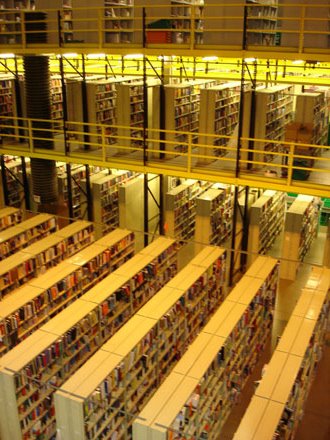
Businessweek covers indepth the warehousing and distribution mechanism of Amazon – capturing live how the world's largest online retailer ensures that gifts get delivered on one of the busiest shopping - and shipping - days of the year. Stephen Graves of MIT sees Amazon getting better and better at orchestrating the work and they're doing it with an increasingly complex product line. Amazon has been building up inventory since the end of summer in preparation for the all-important period between the start of November and Christmas Day. Shipments of new merchandise that people have ordered keep coming in, of course. But the whole idea this time of year is to sell and ship all the items Amazon has been stockpiling for months. Amazon’s warehouse is a book browser's dream, but a librarian's nightmare: The books in these "pick modules" aren't stocked Dewey Decimal style. Instead, they're placed randomly and their location is recorded with a handheld scanner, so pickers with scanners can more easily and efficiently find them later when an order comes in. Amazon’s internal turnaround time : Down to a couple [of] hours per multiple-item order. Read the article and look at the pictures carefully and readers will acknowledge why I keep emphasising the supremacy of process in business competitiveness.


(Image courtesy : Businessweek)

Category :
|

Sunday, December 25, 2005

RSS Reader Becoming Integral Part of Outlook

Bill Burnham once wrote that in the contest between E-mail & RSS,the former easily wins. Addressing the blogger’s constituency, he added that given the almost ubiquitous reach of e-mail and its "push" nature, for reaching users, one should probably make e-mail the preferred means of subscribing to any blog. Sometime back Microsoft announced that it is baking RSS into Vista – at the platform level itself. Microsoft’s belief is that RSS is so powerful that it needs to be in places other than RSS readers and browsers. Microsoft is focusing on three things in Vista around RSS :
- First, making it easy for users to find, view and subscribe to RSS feeds;
- Second, making it easy for developers to put RSS in their applications and enable new classes of RSS applications;
- Third, creating a set of extensions for RSS, known as the Simple List Extensions, that can be used to enable Web sites to publish feeds that represent ordered lists of items, such as a wish list or top 10 lists.
Michael Affronti, program manager, Microsoft Outlook writes, RSS Aggregation in Outlook is aimed at providing the user with a consistent look, feel, and experience while interacting with RSS feeds and related information. While RSS can be a complex technology to interact with, Outlook will merge the complexities and cover it with our friendly user interface. From the beginning of interacting with a feed using the subscription process through managing your feeds, their associated folder hierarchies, and potentially sharing feeds with others, Outlook will cover RSS in those situations from end-to-end. Interacting with RSS feeds will be extremely similar to managing the mail items now. Since RSS live shall be within the mail module the standard look and feel of folders, hierarchies, and the drag-and-drop shall be maintained the same. support RSS items will be a derivation of the IPM.post message class, so compliance with ZOOM and related core technologies will be easy to implement/strong>. Roaming support will enable Exchange users to have their feed items follow them from machine to machine, keeping their RSS items with them at all times. Another reason to firmly beleive that the blog ecosystem is becoming an integral part of the mainstream applications. Do note that Outlook is baking RSS much ahead of other web based email players providing such neat faciltiies - what currently exists is more of a limited RSS reader facility made available ( say inside yahoo mail or gmail).Any guess about the future of standalone RSS readers?


(Image courtesy : Michael Affronti)

Category :,
|

Om Malik’s E-Book Of His Best Posts

To celebrate the crossing of publishing 5000 posts, Om Malik, has created an e-book of the top 20 posts. Om Malik is an evergreen favourite and clearly an inspiring name in the blogosphere. I follow his postings quite regularly and am delighted to see the e-book presented as Christmas gift. Among the posts included in the e-book include ,Om Malik’s well known posts like
- Telecom’s death spiral
- How Yahoo got its mojo back
- The Huawei factor
- Internet Anxiety Disorder


I would have loved to see three more postings( All these actually remain fresh in my mind after several months of getting published – Testimony to the power of ideas discussed therein) of his in this e-book – one titled - The global internet shift, Asia is where the action is where he made the famous statement –“The axis of technology has shifted to south china sea” & the widely read posting on internet’s deflationary effects with guest post by Robert Young titled Google – the ultimate deflator. I also like his post on learning to peel onions at home.. His blog is always improving in its content and layout and here’s wishing Om Malik all the best in his future endeavors and more readership for his blog.


Category :
|

The Digg Phenomenon & Its Robust Ecosystem

We recently covered the phenomenon called digg. Digg started with the notion of how to leverage the collective mass of the Internet in various ways: applying it to content, using it to rank content, using it to make content more palatable to the masses. Automated systems take time to crawl the net. Editorial systems have the human factor. They may decide they're not interested that day, or they'll do it tomorrow.
In Digg’s case, there's no barrier. The larger the critical mass of users and the collective wisdom applied to digg, the better and more relevant the stories get. Alex Bosworth writing about the Digg phenomenon finds an interesting ecosystem at play behind the scenes.
There are five groups of people who make digg.com what it is.
- Readers : an educated guess would be that probably ten to twenty percent of those ever click 'digg', they are mostly just there for the end product of the digg machine: an array of interesting news and links often presented before the other news sources.
- Diggers: some percentage of the readers, probably ten to twenty percent. They bother to vote for the stories on digg.com, which changes the numbers next to the stories and enables stories to get to another queue - the diggnation podcast.
- Hardcore diggers : people who sit in the queue of submitted stories and watch for breaking news that should make its way up to the front page, or report stories as being spam or irrelevant.
- Submitters: people who post fresh stories. It's difficult to post a fresh story to digg at this point, it's a competition for who can submit it first.
- News publishers : often bloggers who want to get readership for their content.
The really interesting about these groups is that each of them is required for the system to function, they all came together relatively quickly, and each of them have different and complementary rewards for what they do. That’s how the power of user generated content and economy of people is exemplified by Digg. Without these people, digg would cease to function: nothing would make it out of the link queue. Overall, with blog publishers creating content they want dugg, submitters scouring the net for stories they can add to their 'published on the homepage' list, digg queuer watchers looking for cool links before anyone else has seen them, and digg readers reaping the benefits and creating a powerful digg.com frontpage readership, digg has come a long way very quickly. As digg tries to go into other fields to live up to their venture valuation, such as perhaps political news, general news, or more innovative areas, it will be interesting to see if they can keep this same ecosystem going or if they have to try to invent new dynamics.
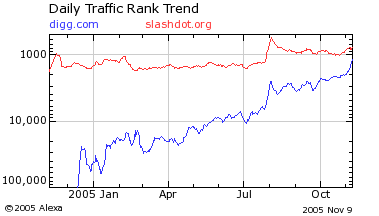
As an aside - look at the two charts comparing traffic between Digg and Slashdot taken in a gap of few weeks – Don’t be confused – they are on different logarithmic scales and therefore look different – Earlier we have seen that statistics can lie and perhaps now pictures can also mislead – at first sight!!


Category :,
|

Web 2.0 : Brickbats Galore But Hope Persists

The Blogosphere is getting to see a lot more strong views on Web 2.0. Not withstanding the galloping progress seen, Richard McManus called Web 2.0 is dead and Russel Shaw wrote web2.0 doesnot exist. Dave Winer provides the best perspective. As he rightly sees it - there are two schools on "Web 2.0."
1. Tim O'Reilly and John Battelle and their VC friends. What they're doing is slicing up Google's PE ratio, tiny slivers of it, and apportioning it to small companies they either buy stock in (that's Tim's strategy) or consult for (that's Battelle). Basically the updraft from Google's stock is so strong it can turn those tiny slivers into tens or hundreds of millions of dollars. It's a good business model as long as Google's PE ratio stays high. (Note : More than Google – Yahoo has bought a lot more Web 2.0 enterprises – Del.icio.us acquisition , Flickr acquisition.)
2. There's the Mike Arrington version of Web 2.0 – He sees it as all about the web coming out of a nuclear winter and bursting forth in a fit of chaotic growth
Let's discount the web2.0 - province of a set of people who neither make huge piles of money catching bits of Google Wind™ in their sails, nor understand the connection between the various products. They just like to be "in" on the latest stupid tech buzzword, to go to conferences and calling people evil who dare to criticize the stuff that they're so hip to.
I sort of tend to agree with Fred, when he writes, Web 2.0 encompasses many of the technological changes we’re seeing happen. It means a new way to look at web applications, services and (more importantly in my case), user experience. Web 2.0 puts the user in the center of the action and activity. If it hadn’t become a movement, many of the services emerging now would have never existed. If it didn’t have support from the right people, it wouldn’t be, effectively, changing the face of the web. It helps to keep going as long as we’re still working towards a user-centered web, better uses for data, more service integration and more simplicity. I believe that evolution requires such branding, packaging and new definitions – so for me –web 2.0 is clearly changing the face of the web & as I wrote earlier, Web 2.0’s impact shall be felt more with the emergence of platforms for the development of rich Internet applications and services. Ajax is enabling the creation of plug-in free Web apps that rival the performance of client-based desktop applications. These developments represent the very tip of exciting innovation to come — innovation that will require a new approach to venture investing led by a new breed of angel and venture investors that are able to successfully balance irrational exuberance with prudent funding to fuel the creation of new platforms for growth. Come to think of it – would Web 2.0 have become so popular without the blogosphere – it looked to me that web2.0 was blogosphere’s posterchild for several months in a row!!


Category :, ,
|

Geoffrey Moore, Strategy ,Business Models, Long Tail & Optimization

The latest issue of Harvard Business Review, has an article titled, Strategy and the Stronger Hand written by Geoffrey Moore, where he talks about two distinct models of businesses. As Geoffrey sees it, there are two kinds of businesses in the world – knowing what they are and which one your enterprise is – will guide you to the right strategic moves. In the complex systems model,enterprises can service large customers and can gor the customer base with large deals centered on mimimal number of transactions. 1000 customers provide a billion dollar business.In the other kind of business, the model is entered on volume operations – here the enterprise is on a hunting mode and strive to acquire millions of customers with significant number of transactions – Say FMCG enterprises.

These two models are world apart and have a different approach along the classic value chain. When enterprises try to mix and math both the approaches it creates strain on the managerial mindset and habits, analogical to the handedness – left or right hand dominance and he points out that industries with ambidexterity with due recognition of missed opportunities could pursue such an option but staying along the stronger hand would ensure lot more success. Talking about the education and heathcare sectors, Geoffrey highlights that the complex systems model is not scalable to the needs of a large society.The only model that scales is the volume operations model - It does so by transforming unique relationships into standardized transactions. It is not driven to achieve excellence but rather to meet minimum quality standards as economically as possible.For any society/enterprise, the constructive path forward begins with abandoning any expectation of providing broader access to the complex systems model and instead focusing our creative energies on raising the standards of the volume operations capability as much as possible. If we look at chris anderson’s much talked about long tail – where does Geoffrey’s postulation fit in – the long tail essentially means a large volume model. On close examination the value chain difference between the two models opens up some space for disruptions and scope for realignments(niche services/offerings) – that’s where the complex system model can accommodate a little more without sacrificing on its core idea of delivering high value to chosen customers.


Category :,
|

Saturday, December 24, 2005

Gamechanging Blogs, Future, Maturity & Pulitzer Price

Sramana Mitra writes, "with the advent of such phenomena as blogs and podcasting, a new era of democratic electronic media publishing has arrived". Excerpts with edits and comments added: Democratic new media publishing enabled at the click of a post-and-publish tab with relatively easy-to-use software wherein text, photo, and video blogs are the most popular forms.The nerds have suddenly set free the liberal arts types in droves. The phenomenon is well at work, and it will change the rules of the game for creative professionals world-wide. It will also change the rules for marketers and brand-builders. It expands the reach and ability to communicate with this universe exponentially, literally within minutes and help in monitoring trends and have other experts participate and contribute; the net effect being a richer and deeper knowledge base. With time, more people will take advantage of these democratic new media publishing opportunities. More serious writers and creative professionals will learn to market and sell their work using the Internet. Micro-payment mechanisms will mature, ad-supported business models will improve, and auctions of good work will become possible. A quality evaluation system will start to emerge as we go along. Good writers, good audio broadcasters, and good filmmakers will be able to monetize their work abundantly and creatively. She boldly goes ahead to predict that there will be the equivalent of the Pulitzer Prize for Internet content—equally prestigious, equally well respected, equally well-regarded. Quality content that's published, managed, distributed, and marketed through blogs, video-blogs, photo-blogs, and audio-casts, is a macro-phenomenonA well written note – and if I may add, with the dizzying growth of the blogsphere the distinction between the big, high-traffic blogs and the rest of the world of blogging will be increasingly sharply polarized. Somebody predicted the end of the individual blogger- though it has not yet happened in a pronounced way. There would come a day when we can see where top bloggers won’t be just viewed as mere bloggers but would be seen as doing something very different from the rest of the folks..


Category :
|

FT Names Google’s founders As Men of the Year

Google’s founders may have conquered the internet world in 2005 – but given their outsized ambitions, this may only be a start. Sergey Brin and Larry Page are named as Men of the Year by the Financial Times, harbour hopes that reach well beyond their search engine business to “make the world a better place”. Applying the vast computing power that lies behind Google’s internet search engine to solving other complex problems in fields such as microbiology could be one area for expansion. The Men of the Year recognition reflects the effect the company created by Mr Brin and Mr Page only seven years ago has had on internet users, as well as the worlds of business and technology, in the past 12 months. Already a darling of the wall street, it has a stock market value of nearly $130bn, almost neck-and-neck with IBM and behind only Microsoft and Intel in the technology industry. The men, who are only 32, see plenty of scope to improve Google’s core product. “It’s clear there’s a lot of room for improvement, there’s no inherent ceiling we’re hitting up on.” There can't be any one more fitting than this duo for this years award. Here's wishing them the very best of success in the years to come.


Image Courtesy : AFP/Google-HO/File
Category :,
|

FOSS Movement : Winning The Hearts & Minds Of The Indian Programmer

Gervase Markham highlights that the US companies, being squeezed by low-cost, high-work-ethic competition from Asia, are looking to cut overheads by outsourcing their IT jobs – most of these go to India, as the country leverages the widespread knowledge of English, a legacy of its colonial past. In terms of the global IT landscape, it is perhaps more significant. As it is becoming uncontestedly clear that NPDI efforts shall be outsourced more aggressively in the coming months, there is also an invisible battle that is going in to win the battle for the hearts and minds of those tens of thousands of Indian software developers. Just as in the American market, on one side are the large commercial enterprises like Microsoft, hoping to tempt them with visions of a smoothly-integrated development system from a single vendor. On the other side is the free software movement, talking about the importance of liberty, unrestrictive licensing and control of your own computing environment. At stake is the ability to harness the brainpower of an entire subcontinent of hackers. During his recent trip to India, Bill Gates talked about recruiting top class Indian talent through innovative competition – this created huge publicity. By contrast, the FOSS.IN conference, a week beforehand in the very same venue, received comparatively little publicity.
My Take: Cultural factors are said to be preventing FOSS’s ability to attract a lot of Indian talent that could flow into major projects. While these may be attributed to some hazy factors like the difficulty of Indian developers to engage with the community, education system not encouraging creativity all that much, Indian developers mostly most comfortable with a structured work plan and clearly-defined boundaries ( While this may appear to be true to an extent – the perception needs to be examined more closely – typically when opportunities for personal advancement are there – this may not be all that pronounced, also note that most of product development happening in the country are for western companies – where by nature the system calls for such a conformance). This style of working is not a good fit for the self-motivated, somewhat chaotic style of the free software bazaar. I think that the FOSS movement needs to be lot more serious in its organizing abilities – marketing, events, sponsorships and in bringing order of magnitude better publicity in terms of their presence & products – India is also a very brand conscious market (talking of the educated elites – FOSS can make a dent here – only by doing this). The country itself offers huge opportunities for deploying technology in the mass market, rural areas, SME and large enterprise segment – cutting edge products/solutions developed and deployed here by the FOSS movement would certainly enhance their ability to attract more talent – High visibility initiatives are certainly needed – that has to go beyond mere philosophical talks – In fact the FOSS movement should even go the extent of setting up a big institutional base in India, where the mass developers could come from - make the country’s FOSS movement responsible for some flagship initiatives, to galvanise the movement and bring in a sense of heightened importance – failing which it runs the real risk of being sidelined in its quest to attract top class talent. Bill Gates recently said that, "a time will come when revenues from India in Microsoft will be in proportion to its population in the world". The FOSS movement need to create such powerful forward looking statements – how about a statement like - 30% to 40% FOSS efforts could happen out of India in next three years, FOSS movement should capture one-third of opportunities in the Indian market - I am also told that Indian service majors are not doing much to promote FOSS movement - while I can’t talk on their behalf or comment on this – I can definitely tell two things – The service majors are largely led in their focus by what they sense as the needs of their customers – today and tomorrow & they have the constant challenge of retention related issues. That’s where the FOSS movement as an instituition becomes a crying need – enough ecosystem components exist in the country – high tech instituitions, lot of home returned high class talent. At the moment, The SAP’s, Microsoft’s, Oracle’s,IBM’s, Intel’s and the Amazon’s besides the Indian majors are getting way ahead in the race to attract Indian talent.

Category :,

|

Friday, December 23, 2005

Microsoft & Opera Browser

John Dvorak sees in Microsoft's announcement that it wouldn't upgrade the Internet Explorer for the Macintosh, leaving that market segment to apparently languish and gravitate towards the Safari browser and Firefox as to be watched carefully . Microsoft does not give up markets with a whimper. Something is brewing. The smart move for the company would be for Microsoft to discard the entire code base of Internet Explorer and buy the Opera browser (from Norway) outright and use it instead. Cooltechzone reports that an insider reported that both Microsoft and Google were trying to bid on Opera, but in the end, the software maker took the lead... Perhaps the most desirable feature that Opera has to offer is its mobile version of the browser. Thus far, it’s the best mobile browser currently on portable devices, and it will surely give Microsoft an easy entry into the mobile market, especially as that market continues to flourish gradually. John is right in his assessment that regaining momentum in the browser business is important to Microsoft since the browser has quietly become the mechanism of choice to lead people into search engines If this happening, the biggest loser might be Mozilla Firefox since many consider Opera to not only be the best browser available, but the fastest and the one with the best page rendering engine.
My Take: Despite all these positives, I still think that Microsoft may not be buying a browser - considering the various operational issues it is having across the world with different regulatory environments in bundling/unbundling the browser from Windows. IE has not lost any significant marketshare. Unless Microsoft wants to keep it as a standalone browser - not an easy option to consider.

Update : Opera denies any takeover talks ever happened.

Category :,

|

AMR On Enteprise Software Trends In 2006

AMR’s Bruce Richardson has a set of predictions for 2006 in the enterprise software industry.Predicting a strong year for the enterprise software and services market – he points to five major growth themes for the coming year.

1. Continued vendor consolidation –that may include the BI space (Agreed)
2. Office 12 becoming a dominant player - the Office franchise will be the foundation for many of the future composite apps for inter-enterprise collaboration I can only partially agree - Also read my note here. Microsoft CRM long way to go)
3. Google economy gets stronger (Agreed)
4. Collaborative apps (Agreed)
5. Limited SOA adoption (Agreed)

To make the list more rounded let me add enterprise applications encompasing Web 2.0, enterprise Mobile applications, VoIP integrations with enterprise applicatons, ESB/BPM and Offshore product development/engineering getting stronger as other major themes that could be felt lot more in 2006.


Category :,
|

Wink Launches Search Engine That Combines Tag Results

Courtesy of Techcrunch saw this annoucement of the launch of Wink. Wink has launched the public beta of its search engine that incorporates tag results from multiple sources including del.icio.us, Digg, Yahoo!My Web with search results from Google. Wink provides results as two halves - the first one comes from these communities, while the second one comes from Google. The results can be bookmarked & associated with del.icio.us. Wink searches across the Tagosphere and allows users to tag results directly its search results. The way it works is a result can be starred and recommended & tagged. Through tags, you can aceess the link during future searches. Wink Blogexplains that while Google and Yahoo are great for the whole Web, and we’ve integrated Google search into our service, but the Wink results - those are a measure of what people are thinking right now, based on their bookmarks and tagging. This is a very interesting one to watch.


Category :,
|

Opensource & Enterprise System

I was in a conversation with a leading expert in the content management space yesterday and both of us agreed that the awareness levels of opensource in content management /portal space is going up .Content/Portal management systems are important for two reasons – they are perhaps the lightest of enterprise systems and owing to its nature its reach and usage is perhaps the highest – success/failure can be assessed by a cross-section of people using the system for a myriad purposes. I had earlier written about liferay -opensource portal. JBoss Alfresco are getting more active. Forrester believes after that the open source market for WCM is not yet mature enough to address large enterprises' highly sophisticated WCM requirements. The report rightly highlights that some of the open source WCM solutions currently available on the market are WYSIWYG - "what you see is what you get" - enable versioning, and can support RSS feeds and blogs. However, some of the latest open source WCM releases don't include basics like drag-and-drop environments, picture resizing, or spell-checking functions. There is still a long way to go before open source WCM projects can address more sophisticated needs, such as multimedia coverage and multichannel delivery - both of which will soon be must-have functionalities. Media houses just don't have the time to wait for open source WCM solutions to be ready. The market has already moved on to audio, video, and mobile news coverage & more importantly the report righly stresses on the need to evaluate opensource solutions as rigorously as that of commercial vendors. I had earlier written that opensource may not be ready for enterprise applications space.Open source solutions at the bottom of the stack – typically workhorse infrastructure elements are getting well entrenched – but even a layer above – lets say starting even at database level – we see the hold loosening and as we move up certainly – opensource becomes one among multiple options. I tend to take a dim view of open source relevance - see Open source -where is the business model, Open Source : Reality Check. We also recently covered Kim Polese view business models of the open source support companies – where the contours of what need to be done to support open source components become quite clear and a not seeing several players in the opensource world thinking along these lines – it would be a major impediment to consider adoption of opensource in enterprises if the support model is not made widely available and the economics and technology upgrade rate demonstrated as beneficial


Category :,
|

The Coming Restructuring Of The Outsourcing Market

New flurry of deals amidst a near miss of a potential takeover by CSC shows that a lot more action await us ahead. Everest Group sees trends in the global outsourcing industry point to a market ripe for restructuring. Peter Bendor-Samuel, chief executive of Everest Group views that a number of trends are converging and market-changing drivers are coming into play-from the coming of age of the major Indian suppliers, to the unbundling of contracts where deal size is getting smaller. Contracts are getting shorter and work is being spread across multiple providers, and large outsourcing contracts signed in the 1990s are coming up for re-bidding. Look at this well compiled list of top ten events in outsourcing in 2005. This in essence means that the global industry is beginning to see industry consolidation and leadership changes, among other things and is on the verge of restructuring, resulting in a redistribution of wealth across the entire spectrum of suppliers, buyers and investors.


Category :
|

Knowledge : Horizontal & Vertical

I read somewhere that vertical knowledge is quickly assimilated; horizontal knowledge takes a lifetime
of dedication. Glenn Harlan Reynolds writes on a very interesting area : horizontal knowledge. He compares the old method of learning things by means like going to libraries and most of the time the knowledge there was spent most of its time on a shelf. He points out that Guinness became a publishing sensation by cashing in on that ignorance. Things are different today where most of human knowledge are at fingertips. One can co-ordinate that sort of information with other people with enormous speed. With email, weblogs, bulletin boards, etc., communities, - a flash constituency can be grouped together with some efforts. He points out that deep down if we assess it is indeed evolutionary in ways that would have defied prediction even a decade ago. Then universal access to practically all information - from all over the place - all for free would not have been even thinkable. Through vertical knowledge, If we had started planning in 1993, we probably wouldn't have gotten here by now. The Web, Wi-Fi, and Google didn't develop and spread because of planning( Vertical Knowledge). They developed, in large part, from the uncoordinated activities of individuals. Wi-Fi is springing up the same way: not as part of a national plan by the Responsible Authorities, but as part of a ground-up movement composed of millions of people who just want it. Lots of smart people, loosely coordinating their actions with each other, have accomplished an extra-ordinary set of things - by applying horizontal knowledge to action. Glen is right in calling this as the power of horizontal, as opposed to vertical knowledge. I agree that this way in this age of discontinuity the next ten years will see revolutions that make Wi-Fi and Google look tame, and that in short order we'll take those for granted, too. It's a safe bet that horizontal knowledge will be in demand for many years to come. .

Category : ,

|

Siebel Takeover : Last Hurdle Crossed

European Union clears the siebel takeover of Siebel. EU regulators examined the deal carefully to see how powerful the new company would be in the European market for customer-relations software and if the tie-up would cause wide-ranging "conglomerate effects" & concluded that the transaction would not significantly impede effective competition. Oracle has a huge integration challenge ahead but has promised its worried customer base to provide long-term support for new and existing versions of its applications. One unintended consequence seems to be that hosting solutions grow in the wake of Oracle acquisitions. Market sources confirm that operationally the two companies are reasy to be integrated any time. We have to now see the news of employee exits.Interestingly whats the price for acquiring marketshare in enterprise market - I % share is 1 Billion USD!! Anyway wishing the New-New Oracle all the best and hope that its depressed stock prices get a filip.


Category :,
|

Thursday, December 22, 2005

Search : Next Level Monetizing Models

Bill Gates talked about new models for monetizing searach results. Gravee, a new meta search engine hopes to shareg ad revenue. with content owners and publishers for being included in its index.Gravee relies on the search results provided by popular search engines like Google,Yahoo and MSN and presumably the idea is that more publishers would be willing to provide Gravee with free access to their content, and this would drive users to Gravee because of its superior offerings. Siliconbeat further notes that with Gravee's AdShare program, when a user clicks an ad on Gravee, "up to 70%" of the ad revenue generated as a result is divided between the 10 sites included in the natural search results on the page (i.e. 70%/10 = 7% of ad revenue to each Web site on the page - for every ad that is clicked). Gravee also shares up to 35% of revenue with publishers who join Gravee's "affiliate program" and place Gravee's search box on their site.
Its blog notes,"Gravee is also about shifting the power from content “distributors” (read: search engines) to “authors” (read: content owners). In some sense, it’s philosophically not unlike the way eBay sought to empower individuals in its community. Pierre’s vision for eBay had alot to do with leveling the playing field and empowering the little guy (in the case of eBay, to trade and interact). Gravee aspires to do a bit of the same by equitably sharing the value created by search advertising (i.e. content distribution) — leveling the paying field, so to speak — and empowering the little guy in search (i.e. content owners appearing in natural search results)". Gravee notes that the blogosphere has been abuzz on how search engines and other web2.0 start ups are taking advantage of content creators and contributors without compensating them.


Category :,
|

Offshoring New Technologies

Andy Hayler talks of his experience in offshoring BI work and highlights the quality focus and good documentation capabilities of indian offshoring vendors are more amenable to traditional applications and opines that it may be a difficult proposition to take on BI consulting, application development and maintenance work in the onsite-offshore model.He beleives that BI applications may be difficult to offshore owing to its inherent nature.

My Take: I hold the view that every ebusiness application to start with is not directly amenable to offshoring -starting from SAP to Oracle to Siebel to WebMethods etc- applications built on these technologies have over a period of time getting more and more of these offshored. While every technology claims uniqueness owing to its inherent nature - fact remains that flesh it several levels down - one can notice common denominators across applications. Product venodrs go scot free in that they do not include offsahoring methodology at all . While the whole world is talking about offshoring, these guys go scot free without telling how to make this happen in such an environment.In fact just concluded a series of discussions with a customer - where the expectation is that three percent increase in offshore component year -on-year is becoming an expectation on large accounts with stablisied operations in respect of e-Business applications. In fact Indian offshoring companies typically look for pushing work lot more offshore wherver possible. Even pureplay consulting engagements are beginning to be executed using a geographically distributed model.I would think that BI is as well following a similar trend and seeing more and more of offshoring though gradually - In fact connectivity sophistication makes things lot more easier these days.

Category :,

|

Distractions & Tryst With Attention

Modern humans may not be able to get rid of the constant interruptions in our day, but can manage them better. In general, people are the exception handlers in all automated workflows, and intelligence and judgment won’t be automated anytime soon. The challenge may be in finding how to connect people and services. Managing that scarcest of resources, attention, is a huge challenge. It’s vital that people choose which channel to be interrupted on.But stuffing the same messages down one channel or another doesn’t alter the nature of those messages, or reduce the total effort required to process them.Linda Stonesays, for almost two decades, continuous partial attention has been a way of life to cope and keep up with responsibilities and relationships. our attention bandwidth is strecthed to upper limits. We think that if tech has a lot of bandwidth then we do, too. With continuous partial attention we keep the top level item in focus and scan the periphery in case something more important emerges. Continuous partial attention is motivated by a desire not to miss opportunities. We want to ensure our place as a live node on the network, we feel alive when we're connected. To be busy and to be connected is to be alive. We've been working to maximize opportunities and contacts in our life. So much social networking, so little time. Speed, agility, and connectivity at top of mind. Marketers humming that tune for two decades now. Now we're over-stimulated, over-wound, unfulfilled. A consequence of email culture is that we don't make decisions: send emails around. We're shifting into a new cycle, new set of behaviours and motivations. Attention is dynamic, and there are sociocultural influences that push us to pay attention one way or another. Trusted filters, trusted protectors, trusted concierge, human or technical, removing distractions and managing boundaries, filtering signal from noise, enabling meaningful connections, that make us feel secure, are the opportunity for the next generation. Opportunity will be the tools and technologies to take our power back.

Organization expert David Allen, author of the classic Getting Things Done , points out, technology "has sped up our need to refocus, recalibrate, and reprioritize rapidly and not lose lots of details in the process." This is giving us attention deficit disorder! Solution amy lay in the term "life hacking"? meaning coming up with ways to reclaim your time. Danny O'Brien,set about studying their secrets. O'Brien allowed himself to be interrupted from his job as an activism coordinator at the Electronic Frontier Foundation long enough to share his favorite strategies:

- Check E-mail hourly. "There's almost no E-mail that must be answered within 5 minutes."
- Track time. To stay on track while looking things up online, O'Brien wrote "Webelodeon," a program that "bugs you every few minutes to ask whether you should really still be surfing the Web."
- Use simple apps . Instead of investing time and money in an elaborate personal organizational system, keep contact info for your clan in a single word processing file.
- (Re)consider paper. Some of the best computer programmers keep stacks of index cards (known in techie circles as the hipster's PDA) for phone numbers and to figure out a program's structure.


- Think little. Don't try to become a "superhero of organization.

Category :
|

Tim Berners Lee Enters The Blogosphere

From Various Sources - Tim Berners Lee has a Blog. He becomes the latest in the list of celebrity/legend to grace the blogosphere. He writes that his blog is at DIG, the Decentralised Information group at MIT's CSAIL and adds that he intends it to be geeky semantic web stuff mostly. The blog won't be for W3C questions which should really be addressed to working groups. No wonder his blog receives amazing number of comments. At CERN in 1980,Berners-Lee proposed a project based on the concept of hypertext, to facilitate sharing and updating information among researchers. With help from Robert Cailliau he built a prototype system named Enquire. In a decade, CERN was the largest Internet node in Europe, and Berners-Lee saw an opportunity to marry hypertext and Internet. He used similar ideas to those underlying the Enquire system to create the World Wide Web, for which he designed and built the first web browser and editor (called WorldWideWeb and developed on NeXTSTEP) and the first Web server simply called httpd (which was short for HyperText Transfer Protocol daemon). Currently, Tim Berners Lee is working on the Semantic web filled in with with interesting possibilities


Category :,
|

Wednesday, December 21, 2005

Hosted Services, SaaS & Outages

When hosted service Typepad went down, it drew severe criticism that Jeff Nolan decided to switch to a new platform. Blogger has given me enough anxious moments in the past with outages.
A friend of mine pointed to the news about salesforce.com outage. It is indeed highly surprising that this should happen with the pioneer and the best known name in hosted solutions - recently we witnessed a Google outage. Amongst the top set of concerns that CIO’s looking towards embracing SaaS solutions have is availability & security. Outages like this have the effect of not only affecting immediate users but most of the times the complete ecosystem as well.As Phil Wainewright points out - having set itself up as the poster child for on-demand applications and the nemesis of conventional software, an extended outage at salesforce.com is bad news not just for salesforce.com but for everyone in the on-demand industry. On-demand outages are a lot like air disasters. They're massively less frequent than outages of conventional on-premises software. But when they do happen, instead of affecting just one company or set of users, they affect a whole lot of companies and users all at the same time. One of the reasons that corproates hesitate to outsource even email servies are beacuse of possible situations like this - not that inhouse infrastructure may not break down - but still the bar is always set high when infrastructure/crtical apps are hosted outside.Voices of concerns about salesforce.com not communicating well enough on time are also getting heard – Mark McCormack once wrote to the effect that it is elementary business sense to appreciate that its not a crisis that people would remember but how a crisis is managed would make a long lasting impression. Hopefully salesforce.com would get wiser and improve its infrastruture and more importantly its customer relationship management & disaster manaagement capabilities.


Category :,
|

Travelling

Had been in seven different cities in the last eight days. Too much travel and heavy pressure on time - shall resume blogging @ regular pace in a day or two.

|

Tuesday, December 20, 2005

Offshore Firms : Acquisitions Ahoy

Wipro announces the 100% acquisition of Austria-headquartered semiconductor design services company NewLogic. Nice way to announce close to the end of the calendar year (Indian HQ firms generally close the financial year in end of March).Indian Headquartered companies have made a series of acquisitions this year – all in the mid-to small range this year. Watch these acquisitions closely – many think that all the top Indian players are more or less all the same. Nope. Generally speaking fast growing service firms do not make defensive acquisitions - they are mostly aimed at growing the business more, as in this case. Acquisitions provide direct insights into identified growth areas and the potential to further strengthen the presence in chosen service areas/Geographies. All the offshoring firms are seeing phenomenol growth in Europe.In general while acquisition moves show the surge in confidence levels about future – they also portend another important happening – the globalization of the offshore vendors – A few more of such small steps would bring in a sea change in the outlook towards the market. That’s why I insist on calling the big firms as Indian headquartered offshoring companies as against Indian offshoring companies.


Category :, Emerging Trends
|

Enterprise Software Industry : Mid Life Crisis

The enterprise software industry is undergoing a massive transformation – while the demise of many smaller players are getting postponed, I wrote that it may be that the industry may undergo mutation before consolidation and predicted structural changes ahead. David Roux, co-founder and managing director of corporate investment firm Silver Lake Partners finds that small startup companies need to rapidly grow beyond $100 million for being able to make money. Most companies that earn $100 million or less tend to lose money & he does not see the return of those days . when the software industry as a whole grew at 20 to 30 percent. Likeother mature segments of the computer industry such as storage and semiconductors, the growth levels for software industry shall also stabilise. The "dirty little secret of the software business" as he sees it is the fact that that the average selling price of software products has declined over the years. Cost saving measures have ensured that the software industry has returned to growth and profitability Only those enterprises that generate more than $5 billion in annual revenue, sustain profit margins greater than 30 percent. Companies that generate annual revenue of $1 billion to $5 billion in annual revenue drop down to profit margins of around 17 percent. Midsize companies that are producing revenue of $100 million to $1 billion can sustain 9 percent margins. But companies that can't quickly grow beyond the $100 million level are generally losing money. The question before small to midsize software companies is how quickly it could get to be a $5 billion business or bigger. These factors are behind the consolidationthat is going on in the software industry & the market share of the top three software vendors, Microsoft, Oracle & SAP have increased from 24 to 30 percent just in the past five years. Four years ago corporate IT departments devoted 65 percent of their budgets to maintenance of existing systems and 35 percent to acquiring new technology. Today maintenance spending has increased to 75 percent and new acquisitions are down to 25 percent. This means it will be harder than ever for small companies to win a share of this business. The software companies have a huge untapped source of credit that they could use to fund future growth & the software companies will steadily increase their use of debt to fund growth as the industry continues to mature – This could keep fanning the wave of innovation in enterprise software.


Category :
|

Monday, December 19, 2005

Microsoft CRM : Miles To Go

Microsoft has begun shipping the much awaited Microsoft Dynamics CRM 3.0, the first major update to the CRM software Microsoft launched three years ago. The new version fills functionality gaps that had left Microsoft lagging behind its midmarket CRM rivals. Customers who bought Microsoft CRM soon after its launch have had a long, often frustrating wait for substantive improvements. The update adds an automation module for direct marketing and a service module to coordinate staff schedules. It also fixes glitches that had frustrated customers, such as the synchronization technology for remote users. Early demonstrations show that the new CRM software and Outlook share a nearly identical look and feel.
Microsoft
has tweaked the software's licensing structure to encourage more partners to offer the customer relationship management (CRM) system as a hosted, subscription service. Microsoft's change looks more cosmetic : The architectural overhaul necessary to make Microsoft a true force in the on-demand software market won't happen until Dynamics CRM's next update, scheduled for release no sooner than 2007. By encouraging partners to offer subscription licensing options, Microsoft’s SME customers may not see any real effect with this launch. Microsoft’s software isn't designed with the multitenant architecture that allows providers to benefit from economies of scale with hosted applications. Each customer organization requires its own infrastructure. Until it offers multitenancy, Microsoft won't be a serious player in the on-demand applications market.
Interestingly, I spotted this from the microsoft site - "Business moves at light speed today, requiring that every company continuously reexamine direction, strategies, suppliers, partners—literally every variable and relationship that might lead to complacency. The intensified search for competitive advantage may mean that some of your best customers pick up and leave without you ever knowing that there was a problem". While Microsoft wants all of its divisions to adopt a services strategy. The company's lagging pace in the hosted CRM market has left it playing catch-up behind smaller, nimbler vendors.Microsoft should look at acquisitions as an option to offer full fledged on-demand offering. Microsoft is not seen as price competitive as it is built with a single tenant architecture. Every customer needs a separate installation of the system, on separate infrastructure. A multi-tenant architecture, supports a fundamentally different cost structure (lower) and gets lot more to look at on-demand more seriously.


Category :,
|

The Probabilistic Age & The Wisdom Of Crowds

Chris Anderson writes that systems like Wikipedia, Google & Blogs operate on the logic of probabilistic statistics, which sacrifices perfection at the microscale for optimization at the macroscale. This age, we're depending more and more on systems where nobody's in charge; & as chris sees it the intelligence is simply emergent. Wikipedia may not be more "authoritative" than Brittanica. Britannica's biggest errors are of omission, not commission. It's shallow in some categories and out of date in many others. And then there are the millions of entries that it simply doesn't and can't, given its editorial process-have. But Wikipedia can scale to include those and many more. Today Wikipedia offers 860,000 articles in English - compared with Britannica's 80,000 and Encarta's 4,500. Tomorrow the gap will be far larger. The good thing about probabilistic systems is that they benefit from the wisdom of the crowd and as a result can scale nicely both in breadth and depth. They do this by sacrificing absolute certainty on the microscale, any single result ought to be crosschecked for veracity.The same is true for blogs, no single one of which is authoritative. But collectively they are proving more more than an equal to mainstream media. Likewise for Google, which is arguably the first company to be born with the alien intelligence of the Web's large-N statistics hard-wired into its DNA. That's why it's so successful, and so seemingly unstoppable.These probabilistic systems aren't perfect, but they are statistically optimized to excel over time and large numbers. They're designed to scale, and to improve with size. Both market economics and evolution are also probabilistic systems. The fact that a few smart humans figured this out and used that insight to build the foundations of our modern economy, from the stock market to Google, is just evidence that our mental software has evolved faster than our hardware. My left brain tells me to accept this perspective from chris as proper - but..A nice article worth reading and discussing.


Category :, .
|

Japan Plans New Internet Search Engine

Matsushita Electric Industrial, Hitachi, NEC and Fujitsu as well as telecom carrier Nippon Telegraph and Telephone and public broadcaster NHK & Japan's government, and universities are teaming up to develop their own Internet search technology. The Japanese society now recognizes that Information searches have become a source of wealth. Japan's concerted effort was aimed at competing with Google . I earlier wrote about a new metasearch engine launched in Asia. Somehow this non-US internet related products do not do well -(I have no complaints – The US rightfully deserves its position as the leader in the online space). While I am not sure how the objective of making japanese companies more competitive with initiatives like this - it is a welcome move - long overdue..If any this can only help things improve globally and force more innovation.


Category :,
|

Sunday, December 18, 2005

Google, Gtalk API’s Raise The Bar : Skype Better Watch Out

The pace at which things move in the online world is indeed amazing. In early September I wrote that Skype may well follow the principle of being a natural part of larger ecosystem with open standards to avoide being nichified.Interesting to watch skype blossom into an ecosystem. Courtesy of Mike Arrington came across this development - Google has just released a set of components called Libjingle that allow third party applications to interact with Google Talk. The components, which include some source code, are being released under a very liberal berkely style license allowing for free incorporation into commercial and non-commercial software. Google says in its API site that this is released as part of its ongoing commitment to promoting consumer choice and interoperability in Internet-based real-time-communications. This can be freely incorporate into software and distributed without any restrictions. There are several general purpose components in the library such as the P2P stack which can be used to build a variety of communication and collaboration applications. A summary of the individual components of the library reads like this:
* base - Low-level portable utility functions.
* p2p - The p2p stack, including base p2p functionality and client hooks into XMPP.
* session - Phone call signaling.
* third_party - Non-Google components required for some functionality.
* xmllite - XML parser.
* xmpp - XMPP engine
.
Google is now training its guns at Skype,forcing them to release their API’s. While Skype clerly provides for integration with the Skype client, Google has gone far beyond this, allowing integration with the Google Talk’s VOIP network. Google Google's Philosophy as seen here needs commendation : it says that you should have a choice in how you communicate with your friends, and it’s committed to upholding this idea of user choice for Google Talk. Today, with instant communications, you can't talk to your contacts or buddies in one service while using another service and makes an open statement that it wants to work with other willing service providers to enable their users to communicate directly with Google Talk users. Good move- probably as I see it next to google search and Gmail this may have the maximum number of profiled community members. Good move- am an instant convert to using GoogleTalk. Let a thousand mashups bloom.


Category :,
|

Bruce Perens' 2006 Forecasts

Bruce Perens makes a set of forecast for 2006. With increase interest in opesnource showing up and with developments like this taking place - it is certainy worth watching what Bruce perens has to say - with my comments added.

1. Java begins its decline as an Enterprise Platform : As he sees it,Java falls flat in one critical area: time-to market. Upstart web platforms like Ruby on Rails have shown that you can use your development time – resulting in scalabilty - add cheap hardware instead of expensive time. (My View : Nope .. I do not see an easy switch from Java to a new platform happening in 2006 in the enterprise space - switching costs and associated change management could be minboggling)
2. Native Linux APIs gain ground as a Cellular Applications Platform
Java's also the Cell phone industry's answer to portability, but not to performance. The advent of Linux and Open Source GUIs in feature phones, and standardization projects like those run by OSDL and Free Standards Group, will begin to be noted in 2006 (My view : I do not see this to happen wholesome but in a very limited way could happen)
3. Cellular Carriers are Just Carriers : Like ISP’s tried in the early days to provide content and failed ,cellular carriers dream of value-added content, served through feature phones, as a revenue enhancer may also meet the same fate. Content will always come from content experts/general media. (My view : Fully agree)
4. Trouble ahead for PHP :PHP has become the BASIC of web application design, used primarily by designers without too much computer science background. The platform hasn't taken well to multiprocessing, and is doing poorly enough from a security standpoint While organizations invested in PHP will band-aid their existing code, new projects will move to other platforms, with designers more cognizant of both software engineering and application security. (My view : Partially agree). Read his full post to look at his other predictions.Honestly I expected much more strong views from Bruce


Category :
|

The Changing Ecosystem : New Media & Super Specialised Experts

Dana Gardner points to a new trend around IT industry analysts reaching new audiences and better serving their traditional audiences through RSS-enabled blogging and podcasting. Indeed real-time analysis via free syndication is gaining quite a bit of attention. Vinnie writes about the changing influence game.He points out that the technology marketers need to think beyond including PR (Public relations with print media), AR (Industry Analysts) and IR (investor relations, which is handled more by the CFO's team) and look at two other categories - one already established - Procurement Consultants and a newer one - Tech Blog sites for coverage as these can be just as influential. See my coverage on tech blogsites.So much so, Nokia has a blogger relationship blog site. tech.memorandum sifts through hundreds of technology-oriented blogs to find the hour's hot topics and who is saying what about them. The results are presented concisely in a single place, updated every few minutes. The difference between the old media elite and the new blogging elite is that the latter gets redefined much more frequently. Many analysts take different positions at diferent time - sites like Armadgeddon have been setup to look at real stories, analyst gaffes and (un)predictions, analinguo, rumours, gossips etc. While writing on the role of procurement consultants, Vinnie highlights the role that such firms can play in covering up influencers at play in many of the procurement steps. The vendor marketing arms may not be in a position to adequateky prepare their sales teams for these steps. I agree that for all major deals on offshoring/outsourcing, procurment consultants and If I may add - Many organisations now routinely track the procurement consultants & legal consultants and their perspective - sitting on both sides - supplier and buyer. Tough negotitations in terms of service level enforcements, contractual violations governance, assessment criteria and mitigation, resoure scaling besides related things are in large measure influenced/set out by these expert consulting houses I see heady days for these type of services. All these point to a new ecosystem - analysts leveraging new media, blogs getting more influential, sourcing/procuring consultants playing a larger role than ever(this we might have seen in other industries already - but becoming firmly entrenched in IT services/BPO industries)- indeed in this complex and competitive world - more than ever multiple dimensionsal readiness and gearing in a non-negotiable for success - this creates a multiplier effect for opportunities - the new ecosystem elements and those associated with them clearly shall play a major role in the days to come.


Category :
|

Saturday, December 17, 2005

The Most Exciting Thirty Years Of Technology : Evolution Of The Personal Computing Industry

While pondering over the debate on 100$ computer - views against by Intel and a set of counter arguments, courtesy of James Seng, came across this excellent article on the recapping the thirty year of personal computers. The story of the personal computer is a fascinating tale, it is ever exciting to read. As Jeremy points out, When you step back and look at the big picture, the overall dominance of the PC becomes clear. In fact it wasn't until 1986 that the PC platform first surpassed 50% market share and that was more than a decade after the first personal computer was sold. Bill Gates then recalled that many mainframe computers had spawned work-alike clones in the past. It was this foresight that enabled him to get IBM to agree to a contract whereby Microsoft could license MS-DOS to third parties. IBM, thinking in mainframe timelines and assuming that clones would be perpetually years behind the originals, thought nothing of this stipulation. They were only concerned with getting the lowest possible flat rate for MS-DOS (which they mistakenly called PC-DOS) in the first place. A combination of extreme foresight and even better luck enabled Microsoft's rise to dominance along with the PC platform. A handful of geeks and enthusiasts turned that dream into reality, and today personal computers are everywhere. Over 173 million computers were sold in 2004, and the figures are expected to continue to rise, as falling prices enable people all over the world to enjoy the benefits of personal computing. A well researched and compiled article - must read for all those tracking, using and working on emerging technologies. Don't miss the lovely chart om market shares of various vendors - in fact it is a good indicator of how the technology itself has evolved and likely to shape up in future.


Category :, ,
|

New Media Rich Technologies & Two Way Web

Jon Udell points out that despite a long campaign to encourage publishers of Web audio and video to enable linking and quotation, media content seldom offers the necessary affordances -and points to his inability to link a video content from syscon-tv site. The fallback strategy was to download the video and snip out the brief segment needed. But because the FLV (Flash video) file was delivered using Macromedia’s proprietary RTMP (Real Time Messaging Protocol) instead of HTTP - the other delivery option for FLV files could not be downloaded. Video screen capture seems to be the only repreive. Digital rights management opponents suggest that technologies such as Microsoft’s Protected Video Path will soon prevent this kind of copying. He argues that should the DRM movement is let to define the media rich technolgies, highly influenced by Hollywood if it has its way would force all to pay a terrible price. Digital audio and video tools, formerly wielded mainly by media pros, are now used increasingly for ordinary business (and personal) communication & jon rightly points out that we’ve hardly begun to understand the kinds of tools and techniques that will enable ordinary folks to compose and remix rich media in the same ways that - almost without thinking about it - we compose and remix text. Today’s digital media landscape is a welter of incompatible formats, containers, and players. Because the ruling metaphor is entertainment, not collaboration, the flow of data is one-way: from producers to consumers. The textual Web has, finally, embraced the two-way model that Tim Berners-Lee envisioned right from the start. That collaborative style is, more than anything else, what the Web 2.0 meme describes - afterall remixing data with high quality Web 2.0-friendly sources yields new possibilities and value. This is one of the bigger concepts that would help many organizations leverage Web 2.0 the most. The music industries attempt at DRM looked ridiculous and the sony fiasco and intel moves are quite scary.I agree with the viewpoint that so long as the tech industry aligns itself with Hollywood’s agenda of control, the two-way media Web will remain an elusive dream.


Category :
|

Google, Microsoft & AOL Stake

AOL & Google are reportedy in negotiations whereby AOL would be able to sell additional ads for its search engine also powered by Google on top of those provided by Google, according to a WSJ report. Google also could promote AOL Web sites among sponsored links in search results. This follows the reported agreement beween Microsoft and AOL - these two would have combined their advertising forces to form a massive global advertising network, selling multimedia, brand- and search-related ads for their own Web sites and third-party sites on the Internet. The MSFT- AOL deal also would have included joint promotions and content-sharing between the sites. Now comes the news that AOL may continue to prefer Google in place of Microsoft.Google derives as much as 10 percent of its advertising revenue and traffic from its partnership with AOL through sponsored listings within its search engine. And although that percentage has dropped from 12 percent a year ago and will likely continue to fall, the estimated $400 million in revenue isn't likely easy for Google to give up.
The reported Google-AOL deal would give AOL a valuation of $20 billion.the deal goes through, Google will retain its search relationship with AOL, as well as its revenue source, and stave off Microsoft in its quest to acquire AOL as a partner. As I covered earlier ,Google may be raising money as a cheap insurance policy against some later day when Wall Street might not be so enamored of the giant search company. Google may not go after big acquisitions but will roll-out incremental products at a blinding pace. Rapid development is an important key to market dominance. That pace of technical development, which probably isn't sustainable for long at any company, isn't possible at all at more mature companies like AOL, Yahoo, and especially Microsoft. Google’s plans are not clear – including the rumoured dark fiber, data center etc. Google needs ever more bandwidth, sure, so dark fiber makes sense to buy when it is probably as cheap as it is ever going to get. It will take the company another five years just to mature the businesses they already have . I also coered in the post Google tea leaves may not be fresh or all that green. Its also time that Google clearly explains its vision that it is executing for the next 2-3 years – very important that there should be a plan to grow and sustain the 100+Billion USD marketcap (incidentally bigger than the GDP of some oil producing Asian nations – the likes of Indonesia.) contrarian views about Google’s valuations definitely need a closer examination. I think this issue needs some serious evaluation as I had been pointing out for sometime like here, here about google's ability to sustain its leadership and support the very high marketcap. Google has to come out in the open about its plans for spending the money say building its own Internet,online index,along with monetizing models in more specific terms. Its time that we get to see and know things beyond the likes of generic macro views like that of George Colony, which focusses only on what and not the how.I would like to let's say hear Google's vision of Web 2.0 or even beyond.Like in any other industry the responsibility of pioneers and leaders are lot more than just looking after themselves - they are trendsetters and rolemodels in the industry.


Category :, Google +AOL
|

Lawson, Intentia Merger Getting Delayed

Infoworld reports that Lawson Software and Intentia International will have take more time for coming together. The two companies say that they are extending the deadline by three months for completing their planned merger. The coming together , was expected to give them the size to become the dominant vendor in the midmarket ERP software space. Three observations here:

A. Reading these things make oracle's claim of being able to integrate like a well oiled machinery (the claim may be tall, but still) - look a significant accomplishment - Frieds tell me that even the planned siebel-oracle merger may be formalised in a few weeks - I am also given to understand that Oracle top management (thay may include Larry as well) are already talking to siebel employees at all levels (privately or together as a group.)

B. Lawson & Intentia together shall definitely show good size(that is a big plus while competing for new deals), but may have to communicate the value proposition much better - it is not enough to talk about geographical reinformcement of strengths alone - what would a nnew customer get out of this - statements of direction of integration of technologies, product roadmaps - all these need to come out more clearly. Make it better known to all that could be interested ( a plan could be in place- but its needed to be known by a lot more)

c. The sales & marketing efforts need a huge push now - its time that the combined entity capitalise on the expected momentum and increase the market noise levels.


Category :, ,
|

Friday, December 16, 2005

China Surpasses US & EU In Exporting Information Technology Goods

IBD points out that China,the world's No. 7 economy exported $180 bil in information and communication devices such as laptops and mobile phones in 2004, surpassing the U.S., with $149 bil, as No. 1, as per the Organization for Economic Cooperation and Development. China, the world's No. 2 computer market, is shifting its supply base from reliance on Europe and the U.S. to Asia. The report highlights thatChina overtook the United States in 2004 to become the world’s leading exporter of information and communications technology (ICT) goods such as mobile phones, laptop computers and digital cameras. China’s share of the world’s total trade (exports plus imports) in ICT goods has grown rapidly. Worth less than USD 35 billion in 1996, China’s ICT goods trade reached almost USD 329 billion in 2004, growing at almost 38% a year since 1996. Bilateral trade data between China and the United States, for instance, show large Chinese surpluses in computer & related equipment and less important deficits in electronic components. It is also notable that electronic components themselves form the second biggest Chinese export item. On the import side, the rapid import growth of electronic components continues, albeit at a somewhat slower path than export growth of computer & related equipment. Will this follow – highly unlikey for a variety of reasons.


Category :,
|

Telco’s, VoIP & Online Majors & Two Tiered Internet

Tech Memeorandum points to a very timely article on the Telco's move to setup a two tiered internet. The article points out that the telco majors wants the right to create a two-tiered Internet, where the telecom carriers' own Internet services would be transmitted faster and more efficiently than those of their competitors - earlier it was speculated that QoS could be used to assign different priorities based on the source carrier/media.The online majors fear such a move would give telecommunications companies too much control over a fast-growing part of the Internet.Telcos are working on ways to deliver broadcast-quality television over the Internet. Telco’s are offering their own advanced Internet video services to their customers, & wanting to charge consumers a premium fee to connect to the higher-speed Internet. Telco’s also want websites to be charged a premium to offer their video to consumers on the higher-speed Internet. That could mean that a company like Yahoo might have to pay AT&T to send high-quality video to AT&T subscribers. Telcos think that since they are spending billions of dollars to build new fiber-optic networks that can carry more data, they are entitled to give their own offerings the bulk of Internet bandwidth, and to charge others for higher-speed access. Through DSL currently they telcos provide internet access but cable TV companies are providing stiff competition. Telcos now want to provide Internet-based television. They want to offer all the programs now available on cable, as well as movie and game trailers, and full-length films. Through new technical solutions they want to overcome limitations in providing such services and they need to build additional network capacity to handle these. The heart of the matter is that most content providers want equal access to the premium, higher-speed bandwidth, while telecom carriers want the right to treat this premium pipeline as a private Internet. The range of services that could thus be offered could alarm the online majors.
As we saw earlier, Comcast sees the future of the company hinging on the success of video on demand, which lets customers choose what they want to watch and when to watch it. "The personalization of TV is the future," said Roberts,CEO of Comcast recently. He believes that a tipping point for digital cable may come next year when he thinks interactive TV will start to take off.
Four large industries - computer makers, consumer-electronics companies, telecommunications providers and entertainment creatorswill feel the shock waves of rapidly developing change in the way the world consumes home entertainment. Telco's are making bold moves, ranging from multibillion-dollar projects to compete with their cable rivals in video distribution, to a flurry of mergers with cellular and long-distance outfits. Both cable and phone companies now offer a "triple play" - phone, video and broadband 'Net access - bundled into a single bill. Add wireless, and you have a quadruple play. Ultimately, consumers will reap the rewards of digital convergence, the ability to gain access to any type of media - music, movies, photographs, television - at the push of a button. Today, for the average cable or satellite TV subscriber, the set-top box provides access to, well, just TV. ISP's may begin to provide add-on services, such as higher speed movie downloads, or enhanced online gaming, for additional fees paid by consumer.As subscribers increase their use of latency sensitive and graphic rich traffic, broadband and cable providers could give network precedence to their own revenue-generating services. I earlier wrote that unless VoIP players pay fees to the network provider, there is no reason the operator should not make the service a lower priority on the network.Network neutrality is the answer but enforcing this may be fraught with difficulties – Broadband and cable players are beginning to offer several services and may claim that their configurations may be optimized for this which by the way also has this tagging built –in. The online majors have raised the issue of preferential treatment - This non-discrimination principle works by recognizing a distinction between local network restrictions, which are generally allowable, and inter-network restrictions,which should be viewed as suspect - More on this topic can be found here. The issue looks tricky with logic and reason telling that telecom and cable players may prevail but history tells that innovators and swift players move fastly and more cleverly and establish themselves.


Category :
|

Thursday, December 15, 2005

It May Well Be Wikipedia & Brittanica And Not Wikipedia Vs Brittanica

Nature Magazine writes that while Wikipedia has become the 37th most visited website, according to Alexa, a web ranking service. The site is getting serious flak from the likes of former Britannica editor Robert McHenry who once declared one Wikipedia entry — on US founding father Alexander Hamilton — as "what might be expected of a high-school student". Opening up the editing process to all, regardless of expertise, means that reliability can never be ensured, he concluded. Nature's investigation suggests that Britannica's advantage may not be great, at least when it comes to science entries. In the study, entries were chosen from the websites of Wikipedia and Encyclopaedia Britannica on a broad range of scientific disciplines and sent to a relevant expert for peer review. Each reviewer examined the entry on a single subject from the two encyclopaedias; they were not told which article came from which encyclopaedia. A total of 42 usable reviews were returned out of 50 sent out, and were then examined by Nature's news team.Only eight serious errors, such as misinterpretations of important concepts, were detected in the pairs of articles reviewed, four from each encyclopaedia. But reviewers also found many factual errors, omissions or misleading statements: 162 and 123 in Wikipedia and Britannica, respectively. As the challenges of being a wikipedian are indeed substantial, the process of updating and social discipline of correcting and referencing needs to improve- signs are positive. At the end of the day it could very well be the case that it is Wikipedia & Brittanica and not necessarily Wikipedia Vs Brittanica.

|

FeedFlare : Breaking The Island Mentality

Dick Costello writes about the new advances in feedburner. This feed service is indeed improving over a period of time and is indeed innovating a lot faster than others. We earlier covered the perspective on how feeds will change the way content is distributed, valued, and consumed. The importance of the feed item and the ability to leverage the structure of the feed to build a bridge between web services and the content item is in general well known. FeedFlare shall enable publishers to configure a very slim "footer" containing customizable actions that will appear beneath each item in a feed. FeedFlare is initially launching today with seven simple options, including:
• most popular tags for this item via del.icio.us
• tag this item at del.icio.us
• Technorati cosmos: number of links to this post etc.
Shortly publishers shall have the ability to ensure that a consistent set of actions and meta-data are displayed alongside the content wherever it is consumed. FeedFlare will provide publishers with an architecture for generalized content item processing - a CMS-independent plug-in framework for web services. A little later there is a plan to launch an open API for adding new FeedFlare services. Also note a very credible acheivement - with With 100,000+ publishersrepresenting more than 6 million aggregate subscribers already hooked to feedburner, it's pretty clear that media consumption habits are evolving in a meaningful way. It's now easier than ever for people to publish content online, be it text, audio or video, and attract an audience of loyal subscribers When the history of blogging/related social phenomenon is written - surely the role played by Feedburner in advancing the ecosystem would be highly remembered.


Category :
|

Mobiles , Growth& Enterprise Adoption

As I begin to upload this post from Seoul, I am not able to overlook the vast advances the mobile phenomenon is making. A very top executive in Seoul told me about the existence of mobile technology powered marketplace for drivers to bid to take drunken citizens back home.Essentially these drivers bid in an auction based on a request triggered through the mobile for driving drunken citizen's vehicle back home. Russ claimed that 2005 shall be the year of mobiles. As we noted in the age of mobility, tools such as e-mail and instant messaging have been around since the dawn of the internet era, but it has taken a wireless communications revolution to turn them into a constant and inescapable fact of life for a growing part of the population. WiFi networks - assure the digitally addicted of a permanent and ubiquitous connection to the wider world. A new study on enterprises adopting wireless sows enterprise spending is set to rise from $50 billion in 2005, as operators, handset manufacturers, enterprises and other companies begin to adopt more coherent strategies. Enterprises of varying size and location are embracing wireless services in multiple ways and spending is set to increase to more than $130 billion in 2008 for enterprise wireless hardware, software and services. Most enterprises remain organised around separate IT and telecoms functions. The enterprise market remains one of huge untapped revenue potential for mobile operators as they struggle with saturated penetration rates and slow consumer uptake of mobile data services. As wireless service providers look beyond consumer and voice services towards more lucrative enterprise and extended data services, however, there are infrastructure, application, security, and operational issues that must also be addressed. In addition, standards are still emerging, continuous mobile connectivity remains a mystery, and enterprises require greater capability, reliability and availability to truly embrace mobility.
No wonder several CIO’s today list blackberry deployment as one of the new key initiatives that they are pursuing. As we wrote earlier, rate at which the features are expanding in the mobile phone is really phenomenal - I would think that the mobile revolution should be rated next only to the internet revolution. Apart from ubiquity of usage, increasing features, the future potential of the mobile technology makes it all the more attractive technology to watch in the future.


Category :,
|

Wednesday, December 14, 2005

Offshoring Is Not Just Cost Advantage Or Centered On Ricardian Logic

The perceptions about offshoring are yet to change even amongst the cognoscenti. A recently released analyst report berated organizations for using consultants from offshore doing high end process consulting. Just saw an agency news – IBM plans to adopt this offshoring model for providing similar services. Someone told me that ten /fifteen years from now Asia would lose out to Africa on offshoring as costs in Asia would go up and by then Africa would be seen in a better light. Laughbale as these are – keep hearing so many such rubbish statements dished out quite regularly. Roger Martin has come out with a good perspective on what really constitutes the building and toning of offshore organizations – He sees that India's leading companies haven't just read the design and innovation manual but also embraced and internalized it.(Hat Tip: Sriram) Each is dedicated to finding, developing, and empowering creative talent. Each believes that deep user understanding is the fuel that powers creativity and innovation. Each has a CEO with a bold approach to transforming the future. Each prototypes and refines new services until users are delighted - and then starts all over again. The employees at these globally oriented businesses are not, by any stretch of the imagination, huddled over their workstations, entrusting all creativity, design, and innovation to their "First World" competitors. Indian companies along with cost advantage are readying to compete at design and innovation. He is spot on when he declares that the Ricardian logic emphatically fails to apply. To ward off Indian and Chinese competitors,in the design & innovation race, he rightly advises that knowing reality is the first step - they had better start by rejecting the notion of an apparent trade-off between low cost on one hand and design and innovation on the other. They need to think "and" - not "or" - and get to work designing.
Commenting on the progress being made by China & India, JSB & JH state,the most striking observation was the deep sense of urgency expressed by executives in both China and India shaped by a clear understanding that wage rate arbitrage is not a sustainable source of advantage. Instead, these executives are highly focused on rapid incremental innovation, both in terms of processes and products, and creatively bootstrapping their capabilities wherever possible. Tom Friedman provides a compelling perspective on the challenge. A key message of the book is that,if western companies act aggressively, they can turn this challenge into an advantage. The capabilities that are being built in these two countries are available to all who understand how to harness them. Western executives remain much too complacent about the challenge, making the opportunity does become a significant threat. The rise of innovation in Asia is real and the best way forward is to recognize the reality and chart a collaborative approach leveraging emergent and latent strengths globally. After all global prosperity is getting more and more highly interlinked.


Category :,
|

Tuesday, December 13, 2005

2006 : Web Advances - Some Predictions

Robin Good has a set of predictions for web& media related areas that need to be watched in the next twelve months: I agree with five of his ten predictions as likely to happen in the next twelve months:

1.Information filtering - The ability to filter, aggregate, monitor and tracks the information items you are interested in will increasingly become one of the most valued services of all. (Findory & Topix.net could become more significant - see thishere).
2.Personal Search - Future advances of search tools positively rely on providing us with increased control on how results are calculated, served and displayed. (Look at this post.He predicts that the search majors shall make advances in these. Image and audio search engines will see major new announcements and launches in the coming 12 months.
3.Broadband - Broadband adoption will grow rapidly, along with new forms of interconnectivity based on new powerful standards like Wi-Bro and xMax. No brainer - see the note and also this one.It is not impossible to envision the potential emergence of mini self-sufficient P2P networks outside of the main Internet enabled by these new lower-cost transmission technologies and data distribution protocols.
4. P2P - Peer media - Personal Media Aggregators, branded and distributed to specific communities of interest will provide the means to share, collect, edit and republish content both within that network as well as to other related ones. These are available in some form already - agreed this would get more important in the days to come.
5.Podcasting - This will keep growing at a fast rate and it will provide lots of interesting and valuable content to all those connected. A killer tool will become available that will allow podcasts to be easily annotated, referenced and automatically transcribed into text at the click of a button. Also the number of search engines and tools enabling search within the audio portion of any podcast will see major growth. See the post podcasting frenzy.
Do read his post for full notes and to look at the remaining set of predictions.


Category :,
|

Alexa/Amazon : Path Breaking Moves – Dawn Of Web 3.0

WSJ reports that Amazon(Alexa) plans to allow software and Web developers to request customized data searches when it scans the Web to seek new information, something that other commercial search engines generally don't allow. Through the just launched The Alexa Web Search Platform, it provides public access to the vast web crawl collected by Alexa Internet. Users can search and process billions of documents - even create their own search engines - using Alexa's search and publication tools. The tools shall let developers make special requests for information such as images or music files during Web crawls. Big search service players offer developers access to their Web indexes. Most of them offer software-developer kits and APIs, or application programming interface, which let programs access an operating system and other services.
John Battelle sees that all these are done via web services. It's all integrated with Amazon's fabled web services platform. And there's no licensing fees. Just "consumption fees" which, at my first glance, seem pretty reasonable. ("Consumption" meaning consuming processor cycles, or storage, or bandwidth). As he sees it , Alexa and Amazon are turning the index inside out, and offering it as a web service that anyone can mashup to their hearts content. Entrepreneurs can use Alexa's crawl, Alexa's processors, Alexa's server farm and he points out that this means that Yahoo and Google will have to stare hard at their own (somewhat limited) search services and APIs, and think what they might do to compete, that much is certain..
As I see it, we have to attach importance to what Alexa's claim that services that can be rendered to someone wanting to build a podcasting search engine could use Alexa's tools and computers to request specialized audio files that were newly available on the Web. Amazon may benefit if applications begin to pint at it for potential sales. This is a forerunner to web 3.0 & developers will also be able to make their Alexa-created applications available to other Web-site operators and developers on Amazon's Web-services site. Alexa’s move is indeed a significant step towards making web3.0,a reality – man things are really really fast.


Category :, ,
|

Sensible Value Accretive Acquisitions

Some friends/associates wrote to me that I might have been a liitel hard in assessing the success of Oracle's acquistions. No, I am not is my submission. Upon seeing this move by he giant, I want to refer back to an earlier post of mine wherein when the acquisition announcement came, I wrote that this acquisition has more value for Oracle in that it is acquiring an entity operating in a space where Oracle is at best seen to be having a light presence. Oracle’s horizontal acquisitions may be seen to be a ploy to eat competition – but this one like the acquisition of Retek can be seen as better fit .With this proposed acquisition of GLog, Oracle gets stronger on paper with a compelling, comprehensive offering for supply chain and logistics management. Oracle and GLog have complementary products with a shared focus that information and adaptive business processes are key to achieving corporate supply chain goals.The point to note here is – acquisitions made to supplement and complement existing offerings generally are sensible and in few cases can provide disproportionately better results. Acquisitions made to kill competition and gain marketshare by bruteforce would only be seen as little value adding & potentially depress stock prices.


Category :,
|

USA Today : Print & e-newsrooms merge

In what can be seen as a decisive move USA Today is combining its print and online newsrooms in a move that the newspaper hopes will create a news organization that goes beyond an "arm's-length collaboration." The newsrooms will be combined to create a single USA Today news operation. Areas such as travel, entertainment and breaking news would be integrated first in the planned overall integration. USA Today has a total average daily circulation of 2.3 million, while the Web site had 10.4 million unique visitors according to October 2005 Nielsen NetRatings, according to USA Today.I wrote while covering the competition between the online and print media that online may not cannibalise but could advance easy reach and more sales - numerous studies suggest that several consumers look at websites - before making the actual purchase either online or offline. Recenty Dow Jones announced more profits from online compared to traditional media(This in my opinion reflects two things: Online making traditional media reach to larger people and rise of online world can't be resisted - better embrace it -Indications are that combined strength of both online and offline readership of WSJ is larger than traditional print media readership).Retailers can definitely experience that buyers of all trendy and unique things surf online, do their research before any purchase - In the online world through comparison shopping, targetted advertising, promotional schemes, personalisation and preference patterns all provide unique value that can potentially drive offline sale as well quite significantly. Add mobile technologies and online world - the combination can really create deep impact in the offline world. The daily circulation of American newspapers peaked in 1984 and had fallen nearly 13% to 55.2 million copies in 2003, according to the Newspaper Association of America.The losses come at a time when Americans have many news outlets that didn't exist 20 years ago, including cable-television news channels and Internet sites, as well as email and cellphone alerts. Many newspapers have substantial and free online sites offering much of what is in the printed paper. These sites might not hurt readership overall, but they can erode a newspaper's paying audience. At the same time, many newspapers have undercut the print product itself, trimming staff and coverage. They also have failed to figure out how to attract younger readers to their pages. Warren Buffet is a longstanding director and shareholder of The Washington Post "sees no clear way" for papers to stem recent circulation declines or turn Internet operations into highly-profitable enterprises. The future of newspapers is to change from a news organization into a news community. Readers would like to do a lot more with news. They would like to see the different angles of a story. They would like to understand it. They would like to know what it means for them. They would like to know how to deal with the consequences. And they would like to know what others think. In other words, the news is the beginning of a process, it's not the end. The digital revolution is definitely challenging the media channels.And USA Today has made the right move in bringing atleast the news generation and synthesis frameworks together to leverage and grow both business better.


Category :
|

Crisscrossing Asia

As ever travelling again - this time china, Japan & Korea - as I move away from Hongkong, the striking reality is the sweeping change happening all across the region. Meeting with diverse set of people, working on different suituations and trying to meet varied expectations. Met with the president of a Global ERP player yesterday - who had virtually given up chasing opps in China after spending enormous time and investing in matching efforts - virtually confirming DSL views on the enterprise market in China.More of such things later. Shall resume regular updates in the next few days. In the meanwhile do not miss to read John Hagels's views on Dubai.

|

Galloping Progress : The Best Of Web 2.0 World

We had been regularly covering developments around Web 2.0, one of the hottest topics today. We covered several emerging developments around Web 2.0 here, here, here, here. The new services represent a shift to what is being described as "Web 2.0," a generation of Internet software technologies that will seamlessly plug together in new and unexpected ways, much like Lego blocks.

Dion Hinchcliff
brings together a list of The Best Web 2.0 Software of 2005 . It’s so amazing to see the number of new and innovative apps that are springing up, based on old and new technology alike. No one person could accurately list the best Web 2.0 software of 2005. As he sees so much has happened in this space recently and a tidal wave of innovative, high-quality software has been released this year. So much in fact, that it's hard to keep track of it all.Concrete examples of web 2.0 abound - this list as he sees it is to give credit where credit is due to all the hard-working folks building the next generation of the Web. Some of the key sites identified as winners ( the posting has a lot more sites listed) – the creative energy and innovative streak is indeed amazing and gives a lot of hope for a better future. Some of the notable sites include:
- Del.icio.us.com
- Netvibes.com
- Voo2do.com
- Digg.com
- Flickr.com
- Openomy.com
- Memeorandum.com
- Writley
- Calendurhub
- Basecamp
There are lot of such sites - also to note that the leaders are also potential takeover candidates - clearly demonstrating the potential value of these applications.

Category :

|

Monday, December 12, 2005

Oracle, Mergers, Depressed Stock Prices & Opportunities

While oracle is all set to announce closure of the Siebel deal, I wanted to quickly assess the progress made by it from a market perspective( my private views, like all posts are in this blog.) - obviously the internal progress card within Oracle would look much better.It is common knowledge that most high tech mergers fail, barring some exceptions. Forbes points out that after spending 14 billion and acquiring 13 odd companies, oracle's stock appears as a petrified one quoting under 13$ - previous peak 15$ in 2002. In the last two years-since the acquisition spree started in earnest-sales are up 24%, net income is up 26% and the company's cash flow from operations is up 18%. The stock has never been this cheap since 1990 on a pure P/E [price-to-earnings ratio] basis, says an analyst. Chuck Phillips thinks that the perception of risk around the acquisitions is much higher than [the risk] actually is and points out the size of the acquisitions were small relative to that of Oracle. He says oracle moves extraordinarily fast to integrate these deals, targeting 30 days at the most for the "vast majority of the decisions." Despite all of the deals- Oracle's core product remains its database. Database sales, lumped together with middleware software for reporting purposes, rose only 4% in the previous quarter, to $1.8 billion, with the value of new software licenses sold not growing at all. Database business is also seeing heightened competition. Some of its acquisitions are definitely value accretive.Applications account for about one-third of the sales, while it has doubled accounting for software sales from acquired entities, WR Hambrecht thinks that if we take the the combines sales of all three companies & compare for same quarter last year, the applications business actually shrank for Oracle. Oracle has a huge integration challenge ahead but has promised its worried customer base to provide long-term support for new and existing versions of its applications. One unintended consequence seems to be that hosting solutions grow in the wake of Oracle acquisitions. Interestingly whats the price for acquiring marketshare in enterprise market - I % share is 1 Billion USD!!

Prudential research finds Oracle's share of the applications market (measured by license revenue of the top five players) will reach 17% at the end of calendar 2005, as against 16% five years back. Post Siebel acquisition, Oracle will gain an additional 7% in 2006 – perhaps giving it a 25% share of the market. He contrasts that with SAP's share, which was 45% in 2001, will likely hit 59% in 2006. Net –Net Oracle is spending more than $1 billion per point of market share, while SAP grew 15% organically. (But understandably oracle marketshare would improve moving forward if we count fresh sale alone – However the counterweight could be that while Oracle may be able to compete with SAP on numbers in the short term, they may have trouble competing longer term on product innovation, due to locked in architectural /support issues).Clearly huge challenges lay ahead for oracle, its customers and perhaps huge upside in terms of opportunities for Oracle consulting and professional service partners!!

Category :,

|

Sunday, December 11, 2005

Broadband , Digital Capability & India : The Game Changer -Part II

In Part 1 of this series, we saw the need for increasing the broadband penetration in India. Continuing on the theme, we need to recognise that the consumer electronics sector is in a transition as service driven model begins to dominate. While assessing the road ahead,I covered the perspective that it is found that for India to emerge as a technological power it needs to provide 50 million broadband connections in the next five years. The growth so far has largely been confined to urban areas, as most operators think rural connectivity is not economically viable. The answer is a combination of policy initiatives and innovation on technological and business models. The GOI itself has an ambitious target and expects the usage to rise to 40 million Internet subscribers and 20 million broadband subscribers by the end of 2010 in India (In the Indian context,download speeds of over and above 256 kbps are usually taken as a broadband connection).

The upside for gaming market is indeed very high - Even in South Korea, where online games are a major diversion, only 7 percent of the PC users employ the Internet for online purchases.Bill Gurley talking about Leisure Time Trends finds that the most amazing shift in free time usage is clearly the move to MMOGS [Massive Multiplayer Online Games]. People are spending hours and hours in the multi-player environments. The biggest bang has been in Asia, but World of Warcraft’s success in the US in the 9 months since launch is nothing short of remarkable. It costs $50 for the CDs and $14/month to subscribe. 3.5m users now. The top success before was Everquest - 400K.People are spending 8-20 hours a week in these “Worlds”.Clearly broadband is redefining the consumer electronics industry - the industry must work more closely with the service provider industry. Broadband - Mobile's first cousin is really creating froth and action in the digital market & India has a huge opportunity to capitalise on this important development..


Category :, , ,
|

Broadband , Digital Capability & India : The Game Changer -Part 1

Courtesy of Contentsutra, I came across this perspective from Bill Gates on the need for India to increase broadband penetration, as this is the key to realize the benefits of the digital lifestyle products spanning segments such as music, Internet, home entertainment, gaming, wireless and video devices. As he sees it, though software was the glue that connected various devices and platforms, it was broadband that was needed to achieve the digital capability & that adding investments in broadband would drive the full realisation of digital lifestyle. He rightly highlights that broadband was pervasive in many countries but in India with just a million connections, the growth was not quite much in terms of penetration. Over three years, India needs to raise the broadband connections to about 10 million and even skyrocket it by reducing the prices. He sees IPTV (Internet Protocol Television), as changing the face of television viewing using broadband. Microsoft is increasing investments to build digital platforms besides trying to drive down the cost of the digital lifestyle products to make them more affordable. He rightly points out that the Indian software developers to play a key role in building new applications. As I see it, Microsoft has made substantial forays in building solutions towards the digital home business. No wonder he has brought this up in his reent trip to India - but besides microsoft's interests, it is a messsage that India really needed to listen to and act upon - fast at that.
India currently has 55 million mobile subscribers.I wrote sometime back that Microsoft has strategised well about its moves in the consumer electronics sector. This blog covered recently digital convergence in living room wherein we covered, inspired by a residential consumer electronics market that is potentially several times larger and more lucrative than the PC business, armies from at least ten different tech-related industries—including PC makers, CE makers, cable companies, telcos, utilities, media companies and software developers—have amassed here in the desert to plan their assaults on the living rooms of the world. It is also true that despite being a global software hub and having a billion-plus population, the Internet penetration in India is only 0.4 per cent, while broadband is 0.02 per cent.
Part II shall follow.

Category :, , ,

|

Ubiquitious Communication In the Presence Era

Recently I covered about the presence era.Feeling another human being's presence is what, at heart, communication is all about, and yet technology has done an uneven job of helping us in this. Hearing a loved one breathing, or bustling about, at the other end of the phone is comforting, but consider a future where we can decide not only how and when people can reach us but also easily share with those people where we are - photos or videos of our environment, our clothing, the room we're in, the view we're enjoying, the Web site we're reading, the movie we're watching. More prosaically, imagine opening a document and seeing not only who else has worked on it but be able to see immediately where they are and whether they're available to discuss it. Imagine a corporate network that told you immediately who else was in the office, and where, through an easy-to-access Web page or desktop program. I see a future where the concept of presence becomes so mainstream that we are able to connect with each other easily, more satisfyingly and less disruptively. One day a phone ringing at an empty desk will seem a quaint historical absurdity. Andrew Kantor believes that we are living in the communication age, mistakenly referred to as information age. We've always had plenty of information, and, being the inquisitive species we are, we've always created more of it. What's changed is that we have new, faster, bigger, and arguably better ways of moving that information around. In an age where mobility is fast becoming the biggest change agent, everyone seems to feel the need to walk around with cellphones in their purses or strapped to their belts. He points out when Hurricane Katrina hit, it all but completely knocked out internet access for New Orleans and southern Louisiana. Besides preventing much information from leaving the area via the Net, the disaster also exposed another problem: The danger of relying on central connection points. He points out that mesh networking— specifically, wireless mesh networking could provide a solution in this case. Instead of each computer being connected only to a server or hub, in a mesh network, computers are connected to one another. Advantages include built in redundancy, no single point of failure. That also makes the network dynamic — people can move in and out of it at will (think fire and rescue) but the network itself remains in place. Second, it allows the network to expand virtually forever. A traditional network is limited by what the central server or hub can handle, because everything has to connect to it. But a mesh network, without that center, has no limits on its growth. Information is only useful when it can move around, and we've done a pretty good job of connecting ourselves to one another. But the next stage might move us from solid networks to more flexible ones, and make the idea of access points obsolete. This is a classic case - where technology creates a new social phenomenon and its adoption pushing new frontiers in technology availability - This reinforcing loop shall certainly create a huge impact across the soceity.


Category :, ,
|

HP, Sun : Changing Dynamics Awaiting A Different Future

Till recently HP was Caught in a no-man's land between hyperefficient Dell and technology powerhouse IBM, trying to cling on to an identity. I have never been a great believer in HP’s abilities in the past – See the post here. However with Mark Hurd at the helm, HP has grabbed share in key markets such as PCS and storage gear, and shown crisp execution reminiscent of its glory days. Businessweek thinks that it may be that all of the company's businesses are now profitable, after years in which its $25 billion printer business covered losses at the rest of the $87 billion company. Hurd has unleashed major cost cuttings and has brought operational focus to initiatives begun by the marketing-oriented Fiorina. While it is a leading supplier of bare-bones servers, HP has been trying for years to increase sales of higher-margin software and services. Challenges in the form of delayed itanium system rollouts, falling demand,impending war on printer market and pricing on consumer models remain. I hear lot of good news about HP from multiple sources – Mark has been quite brutal in getting fat pay management layers out of the company and definitely HP is getting an operational facelift – Field reports in fact confirm that HP is getting lot more focused. HP also has notched some succes in global outsourcing deals and has a decent presence in India as well which can help in engineering and services significantly. It appears that Mark has created a silent shakeup internally – and without demotivating employees seems to be unleashing a grater sense of accountability and focus. So far so good. So what about the other beleaguered big name- Sun. Nicholas Carr points out Sun clearly lacks a coherent strategy - One minute it’s the Anti-Dell, then it’s the Leader in Responsible Computing, then it’s the Fastest Chip on Earth company, then it’s the Volume Is Everything company, then it’s the Free Software company, then it’s "The Dot in Web 2.0," then it's challenging Steve Jobs to a “pod duel” – and that’s just in the last two months. I agree with Mr. Carr that if Sun is to succeed, it needs to get its act together - to adopt a single, coherent market positioning and stick to it with relentless, unwavering discipline. Also to note is the fact that changing landscape creates new but big opportunities - Sun has the wherewithal to play well in the emerging utility computing space – it has the breadth and depth to offer full fledged consulting and professional services, also focus in a concerted way in areas like RFID where they moved in early – with frameworks in place and acquisitions like that of SeeBeyond should give it a leg up- Sun needs to move away from ideological cliches to becoming more operationally focussed (HP has been in some measure able to do this in the last six months) and stay commercially successful.


Category :,
|

Forrester on Offshore GDM On Infrastructure Management

Infrastructure Management is such an critcal and integral factor in wining outsourcing deals – the challenge and benefits of distributed management augmented by global delivery would become a key factor for all those planning to outsource. This is also a practice that requires lot of maturity in winning and in operations – maintaining service levels. Forrester has just released a report assessing the capabilities of various players in the Infrastructure Management space and the list has included both western & Indian headquartered players.

Hats off to Forrester for
A. Carrying this study and ;
B. More importantly including offshore vendors in the list along with traditional western players

I am seeing analysts very selective in assessing these together ( may be there are some valid reasons). With increasing telecom bandwidth and overall maturity and a sense of comfort in offshoring , infrastructure management would become an important space for vendors to scale up and deliver well. This is also an area where the demand for distribution of facilities and resources outside of India for traditional outsourcing supplier can be high compared to traditional application development / maintenance & consulting. In the last twelve months, a few major deals inside India ( by indian market size) were won by western players, granted some were won by Indian headquartered players as well. Fact remains that diversified and integrated GDM network and strategy are seen in disaster recovery (DR) and business continuity (BC) capabilities as well as in extending more flexible support options. The report rightly highlights the current leadership of traditional western players but makes an important observation about their transparency in marketing the capabilities as against that shown by Indian headquartered vendors. In terms of distribution, the report rightly highlights that traditional western players do not offshore much and Indian headquartered players need to have more facilities outside the U.S & U.K besides India( Some are already doing it – but Forrester sees this as limited). A well timed report, I should say when the market is set for a major upswing.I am hoping for a day when independent assessments for savings in respect of major deals can be published and assessed - the dynamics here are very different compared to traditional application outsourcing, here the actual savings can be more accurately computed.


Category :, ,,
|

Saturday, December 10, 2005

Del.icio.us – Now Part Of Yahoo

Del.icio.us founder and Chief Executive Officer Joshua Schachter wrote in his company's official blog that it is now part of Yahoo. Jeremy pointed out that Flickr and Del.icio.us team may work together. This is definitely a big boost for Yahoo – Its yet to take off Web 2.0 would significantly benefit with the advantages that comes along with Del.icio.us. I think Yahoo may benefit a lot more by keeping del.icio.us service as standalone and keep integration with other Yahoo services as an additional option. I recently wrote that very few companies have grown as fast as it was before being acquired, post acquisiton also and still retain its identity and brand recall - Skype has admirably done that. Hopefully Yahoo shall take the cue here.
In an earlier post, this blog covered the perspective on Social search, Yahoo web2.0 & Del.icio.us wherein we saw that
- Del.icio.us enjoyed the advantage of being a non-threatening partner all along and has built a substantial userbase – Yahoo would benefit by that.
- Del probably had more latitude to create flexible win/win biz models and deals resulting in:.
- Installed base : Del.icio.us is growing rapidly and has the goodwill of the leading edge Net community.
- Not limited to existing social networks-. Del does not bother w/layering on social networks just yet.
- Not conceptually limited to search per se-Packaging My Web 2.0 as "search" is going to be somewhat confusing for general users.
The Web 2.0 companies emphasise on making end users a central part of their services and giving them the ability to contribute and participate in the creation, sharing, and management of content. These companies also tend to be big believers in open platforms that allow and foster the development of Web services that build on top of existing applications and Web sites run by third parties. The web 2.0 ecosystem shall transcend new frontiers. If this principle is adhered to Yahoo and the web community at large shall benefit significantly. Yahoo recent actions in buying Flickr &Del.icio.us would certainly go a long way in fostering web 2.0 phenomenon a lot more and we shall new startups entering, steeping up and receive lot more funding - talks/action around Web 3.0 shall also see increased focus. This also signifies an important trend - commercial vendors shall move in aggressively once scale is reached wherein the potential gets a positive rating. Technorati, may be the next to watch. Hopefully Google/Microsoft are listening.


Category :,
|

WIT, IWS, SWITCH : It May Well Be OB4( SWIT)

Vinnie points to Jack Sweeney ,editor of consulting magazine writing in his latest editorial "Sometime within the past 3 years, the consulting profession entered a new age". He then coins a new acronym - WIT - for Wipro, Infosys and TCS, the 3 biggest Indian vendors. Stephanie Moore recently published that it is IWS, when it comes to consulting. Vinnie shares his perspective that it should be better called representing SWITCH.
Very frankly, with so much to conquer in the market, am not too sure if these companies see themselves as kill-each-other type of competitors – this might be probably felt while competing on specific deals/geography. I definitely feel that all these companies are genuinely looking at ways and means of growing bigger by adding /improving capabilities to provide better value - to me, most of their actions only indicate that. I am also not too enthused by all these comparisons – I read an analyst report this morning – which said that one of the WIT company is undervalued compared to a relatively smaller player.I just could not help laughing.Several western analysts/publishers( as against most big enterprises/consumers) repeatedly make the mistake of only looking at players – who had been there in the market for a long time – For instance Jack Sweeney’s list consists of players who are operating in the space for more than two decades – one of them closer to four decades – I have nothing against them – They command well deserved respect ,I have lot of my friends in these organizationsThe best approach as I see it would be to look for pace of growth shown by the players,with all others things being equal. Among offshoring vendors – there are differences in emphasis – there are distinct emphasis in terms of technology/sector focus, geographical emphasis besides vertical strategies, service offerings - all may appear the same at the surface level - flesh things layers down and look at which of these take most time in their respective board room meetings / listen to the analyst calls and presentations - talk to their ex-employees, customers, talk to headhunters recruiting for these enterprises - you can spot distinct differences..

Some of the recently released reports/rankings/awards give clear pointers about the emerging dynamics as can be seen in terms of declared leaders/winners in consulting, SAP professional services, recent Gartner sourcing awards and the Gartner’s magic quadrant for ERP Service Providers, 2005 and the like.

Over time, I somehow think that Tier 1 would finally be the OBFOUR (Offshore Big Four) - essentially SWIT –constituting the Tier 1. The list like the Fortune 100 list may see a churn with passing time. I hate to see people call these as Indian offshoring vendors – all of them are becoming aggressively more and more international in their outlook and style. If we continue calling these Indian offshoring vendors- it may not be any different from calling traditional big four as American consulting/service providers.Like the seven wonders of the world slowly giving way to the new seven wonders of the world,there is no doubt that the consulting, systems integration and professional services market is changing . But Vinnie – no – in this case, given the maturity and opportunities that lay ahead, even with this new acronym – the players may not disappear – this also holds true for most of the players outside the top list, so long as they are well managed and are strategic in their growth plans.


Note:
A. These like all other post are my personal views.
B. The abbreviations : S -Satyam, W-Wipro, I -Infosys, T-Tata, C-Cognizant & H -HCL

Category :
|

Web 3.0 : The Hype, Reality & Promise

I am seeing a lot of coverage and noise about so called Web 3.0. David Hornik thinks we are in the heart of Bubble 2.0. Sadly, only one thing follows Bubble 2.0 and that is Bust 2.0. & points out that on the good side, there's always Web 3.0. While Web 2.0 may not be a bubble as worse as Kevin sees, I agree with David that too much hype is being created about Web 3.0.

With Web 2.0 ideas getting more and more attention and beginning to see action centered around it. Dick Hardt defines Web 2.0 as being the difference between DOS and Windows. In DOS we just used one app at a time, APIs were pretty minimal, there was no dynamic linking of data or components. Windows enabled multiple apps to be running in concert, at least most of the time. Web 2.0 is still emerging.

A quick assessment of what constitutes Web 3.0 make interesting reading . Mike Orren looking at here thinks that:
- Web 1.0 was "we make; you use."
- Web 2.0 is "you make; you use" , and asks;
- Is Web 3.0 "we make/you improve; you use"?
I think that web 3.0 proponents are talking about making web 3.0 influence lot more of what happens in mainstream life
. Jon Udell explains that in practical sense that in the Web 2.0 era, we're learning how to build and use software that enables us to collectively manage information resources. Those skills will serve well in Web 3.0, when we expose other kinds of resources - power, transportation - to the same network effects. He sees network effects taken for granted when we use services like craigslist and eBay should be extended to normal day-to-day services & sees possibilities like networking home appliances in order to itemize electric bill, and to expose electricity consumption to price-sensitive management and with travel - ability to negotiate online for an air taxi that would take travelers directly from regional airport to its counterpart near the destination, by passing the usual spokes & hub. He believes that these are now more clearly discernible on the horizon. The ideas are laudable
As I see it, Web 3.0 is all about decentralization of web services. Web 3.0 will probably be much more distributed than its predecessor ( even this is waiting for wide adoption and some notable success). Quite logical All I can say is that next five years none of these may happen – clearly Web 3.0 is one of those things where imagination runs miles ahead of reality.The creativity and pace of the web world is clearly amazing - after all the industry has progressed based on making such far reaching thoughts become reality. The reality has the potential to come true – years down the line.


Category :, ,
|

Friday, December 09, 2005

Today’s Youth – Omnipotent Technology Generation

Writing on the theme of youth & technology, we saw how technology is making them connected cocoons. We noted that the MTV generation doesn't have fixed values, so they are more open to new technologies. Wi-Fi access to Nintendo gamers ia an important related development. This phenomenon is creating pressures for a variety of industries - The toy industry is responding to age compression,wherein kids are getting older younger – and is creating a revolution in the toy industry. Realizing that today's kids are sophisticated and tech-savvy,they are fighting fire with fire by building their own lines of "youth electronics." No doubt as we covered earlier, mobility has created revolutionalry sort of changes- already, governments have fallen, youth subcultures have blossomed from Asia to Scandinavia, new industries have been born and older industries have launched furious counterattacks and increasingly technology and mobility shall certainly act as the most dramatic change agent in the society. Well,from a Nice-to-have to a Critical- must – That’s the role of technology in the hearts and minds of young people today. There’s been a lot of speculation about the breadth and depth of technology use among young people. This data,part of the forrester finding begins to codify that discussion.Young consumers are using more technology at a younger age to connect with more people than ever before. 87% of 15-year-olds use instant messaging, while nearly half of 12- to 14-year-olds have a mobile phone. The survey focused on young consumers regarding their use of various devices, gaming, online activities, music downloads and file sharing, communication technologies, and attitudes toward media and advertising. Among the highlights:
- Young people are communication junkies. Eighty-three percent use IM versus just 32 percent of online adults. More than three out of four young consumers have a mobile phone.
- MP3 players top the device wish list. Twenty-five percent of young consumers said they plan to purchase an MP3 player in the next 12 months.
- Entertainment grabs their online time. Young consumers spend almost 11 hours per week online, while nearly one in five of the youngest of this group (ages 12 to 17) spend 20 hours or more per week online.
- Youth & game. Eighty-eight percent of boys ages 12 to 17 own a game console, compared with 63 percent of girls the same age. Fifty-five percent of boys would rather play games than watch TV.
- Young consumers represent the social marketing ecosystem . Fifty-two percent say they rely on recommendations from friends or family when making a purchase, compared with just 34 percent of adults.(only 6% believe that ads tell the truth!) so marketers need to reach young consumers on their terms. As they have grown up to be more self-reliant in a digital environment, they have confidence in their ability to distinguish between the two.


Category :,
|

Blog : Piece Of Technology

NYTimes joins the list of mainstream publications like Businessweek, Guardian in launching blogs as part of their overall online presence. The New York Times is launching several blogsas part of its new Red Carpet entertainment awards site and, in that context, Deputy Managing Editor Jonathan Landman sent a memo to the staff about The New York Times approach to blogging, writing therein,"A blog is nothing more than a piece of technology... We’ll use the technology our way."

laobserved has published the full memo. Excerpts :
It’s worth spending a little time thinking about blogs, and about ourselves. Blogs make some newspaper people nuts; they’re partisan, the thinking goes, and unfair and mean-spirited and sloppy about facts. Newspapers make some bloggers nuts; they think we’re dull and slow and pompous and jealous guardians of unearned “authority.” It’s a pretty dopey argument. Indeed, some blogs are lousy. So are some newspapers. Some blogs reject journalism. Some practice it. The point is, a blog is nothing more than a piece of technology. It allows people to compile thoughts, connect with others and interact quickly with readers. People can use it any way they want to. It has no inherent ethical or moral quality, though it does have its own special power. As I see it, years back newspapers said almost similar things about launching online initiatives - clearly while a monetizing mechanism is still not clear, the reach of the blogsosphere would exceed that of the newspaper media in the days to come.


Category :, ,
|

Thursday, December 08, 2005

Frenzy Called Podcasting

The Podcasting frenzy is closer to its peak now. I earlier covered about IBM embracing podcasting and noted that big corporates like GM, Pepsico making concerted efforts to adopt podcasting in a big way. Steve Rubel points to HBO has added a bunch of audio podcasts to iTunes including Rome, snippets of Curb Your Enthusiasm and full episodes of Real Time with Bill Maher!. It may be in full fitness of things that 'Podcast' is declared as the Word of the Year. The New Oxford American Dictionary have selected "podcast" as the Word of the Year for 2005.
Podcast, defined as "a digital recording of a radio broadcast or similar program, made available on the Internet for downloading to a personal audio player," will be added to the next online update of the New Oxford American Dictionary, due in early 2006. Among the key runners up include Bird flu, rootkit, sudoku – all clearly very popular words
. As far as I know, Kaps,who runs a popular blogsite was the first to blog about podcast being selected as the word of the year. Readers may recollect that in 2004 , blog was declared as word of the year.
Evidently broadband is redefining the consumer electronics industry and Bill Gurley is spot on : The internet has not peaked.Clearly social phenomenon and new media are getting centerstage in today’s life. Days back when commenting on IDC 2006 predictions , I wrote that I would have loved to see a few more predictions centered around mobility and related applications, enterprise adoption of technologies( say BPM), SOA & Business process platforms, podcasting, new class of applications over the Net(Web2.0) etc covered in the list.


Category :, ,
|

Web 2.0 : Priority Is Getting Users As Against Costly Uptime

In response to Jeremy Wright’s view that web 2.0 companies need 99.999% uptime or get toasted David provides a disagreeing but convincing perspective. While agreeing that to go from 98% to 99% can cost thousands of dollars & to go from 99% to 99.9% tens of thousands more – the question to ask is the implications of the site being down for a few minutes.He further alludes what if Delicious, Feedster, or Technorati goes down for 30 minutes? The criticality an average “Web 2.0” application is one with loss of comfort as the result of something going wrong. It’s not a profitable decision to shoot for 99.999% availability for web2.0 applications.The things to watch however is that in the Web 2.0 ecosystem , with site outage, APIs also suffer. Those extended small businesses that use APIs for commercial purposes can be hurt by outage. Scaling is not just about adding more hardware, setting up redundant database, load balancers—but rather more on design, data architecture & re-designing your code. Several times, it is seen order of magnitude improvements come by engineering/tuning and not necessarily by adding costly servers.I have seen several discussions where people are obsessed with scalability & security (disproportionately so). I agree with the point that before the site has users, it’s a waste of time ensuring that they can always get to the service. A good principle to note here : A project that spends a lot of time upfront on scalability is the one that can’t afford to fail. And a project that can’t afford to fail is an inherently uninteresting idea for a new growth business. The key thing for startups to worry is about getting something to a point where there’s reason to worry about it.


Category :
|

Sony : Malware Ahoy!

As soon as I came across this brilliant revelation, I wrote,not only had Sony put software on his system that uses techniques commonly used by malware to mask its presence, the software is poorly written and provides no means for uninstall. Worse, most users that stumble across the cloaked files with a RKR scan will cripple their computer if they attempt the obvious step of deleting the cloaked files. While the media industry’s right to use copy protection mechanisms to prevent illegal copying is legal,based on what Mark has presented this is a clear case of Sony taking DRM too far. Now, few weeks after the incident,The Register writes that Sony has again been outed for including questionable software on its music CDs, after it emerged a security vulnerability in content protection software shipped on some of its disks could allow consumers’ PCs to be hijacked. According to the EFF, the vulnerability centres on a file folder installed by the MediaMax software shipped on some Sony CDs, “that could allow malicious third parties who have localized, lower-privilege access to gain control over a consumer’s computer running the Windows operating system.” It is a very concerting issue – given the fact that the EFF claims 30 other labels use this software means the big labels either do not realize the harm they are causing by distributing malware or they do not believe they are liable. Its hightime that initiatives like this one from Intel become commonplace. Quite scary indeed - as I wrote earlier, the most important thing for services and users of services to realize is that trust is an extremely valuable commodity that is hard won and easily lost.


Category :,,
|

RIM : Tougher Times Ahead

Last Week a U.S. federal judge's decision last week opened the door to a possible injunction that would stop sales of BlackBerry mobile e-mail devices, and shut down BlackBerry service, in the U.S. Gartner has issued an alert warning customers to stop or delay all mission-critical BlackBerry deployments and investments in the platform until RIM's legal position is clarified. The advisory note is spot on in egging customers to demand that RIM's work-around plans be made available — in detail and in public — and carefully review their legal and operational impact. Gartner advises customers not to sign any agreements that could involve them in the RIM/NTP dispute. As contingency measure, alternate solutions for mission-critical applications may need to be put in place. Ofcourse alternative solutions could cause transition costs that will be unnecessary if the case is settled.The best course would be that if the applications are not mission critical , no action may be needed.I do not know of applications where Blackberry plays a role –where it is not mission critical – the key thing about Blackberry is its constant availability and world over at all leves – CEO downwards – whoever has used Blackberry would find it difficult to live without it – such is the powerful impact that RIM has brought forth – but clearly with so much uncertainities around – most of management time and attention would obviously go towards fighting this. An outage would be a near disaster for most users. With increased competition and with Nokia stepping up the heat, RIM may be in for tougher time ahead.


Category :, ,
|

Wednesday, December 07, 2005

Bill Speak On The Next Big Thing & India

India is seeing the big names of the IT industry visiting this quarter – John Chambers, followed by a no- press meet visit by Sam Palamisano, then high profile visits from AMD, Intel’s craig barrett visit – now Bill Gates is in India – The Google founders were here a quarter or so before.It is all happening in India. Bill Gates visit to India always attracts a lot of coverage and attention within India. He also does not disappoint & is very liberal with talking to the media. The media also competes and try to overdo each other. I know that tonight there is a prime slot interview that is scheduled with Narayanamurthy & Bill Gates participating.titled –“Changing India”

Pre-empting NDTV, The Economic Times organized a breakfast meeting between Bill Gates & P.Chidmabaram, The Finance Minster for India and has published some excerpts of discussions between them and from an exclusive interview as well.

- Bill Gates believes that the next humdinger will be computers that are able to see, talk, and recognize handwriting. The only caveat is that while robots will be able to perform most tasks, they will never be as smart as human beings.

- As for the future of the PC, he said that it has a great future but in a very different form. Security issues are probably the biggest challenge before Microsoft, he said. Checking spam, holding off hacking are critical issues to make sure that people feel safe in being able to put sensitive material on the internet.

- In the sectors that Microsoft operates, India has a great advantage with its huge English-speaking population and great institutions like IITs and he adds that China has not done even a tiny bit on the lines of what Infosys and Wipro have achieved.

- Indian manpower is already amongst the best in the world. In a recent Microsoft test, he points out that eight out of the 14 people who bagged the perfect score were Indians.

As if reinforcing the big india plans of other majors Viz. Cisco's $1 billion investment plan in India, the largest that Cisco has committed outside the US, AMD's major plans for the country, Intel's matchingcommittment, Bill gates beleives that the
future revenue flows
from Indian operations would be very high and notes that, "a time will come when revenues from India in Microsoft will be in proportion to its population in the world". What more to say - let all this happen
.


Category :
|

Tech Blogs - The New Elites

WSJ has an article on the rise of the tech blogs - the article notes that in the standard theory about technology blogs - mainstream media were out of touch, elitist or simply ossified, and they would soon be supplanted by a grass-roots army of bloggers. The reality is that while there are now as many tech blogs as stars in the sky, only a tiny fraction of them matter. These are becoming the the tech world's new elite. Reporters for the big mainstream newspapers and magazines, long accustomed to fawning treatment at corporate events, now show up and find that the best seats often go to the A-list bloggers. Big bloggers are frequently pitched and wooed. In fact, with the influence peddling universe in this state of flux, it's not uncommon for mainstream reporters, including the occasional technology columnist, to lobby bloggers to include links to their print articles. So much so, Nokia has a blogger relationship blog site. The easiest way to follow this world is via a useful blog-tracking service called tech.memorandum. It sifts through hundreds of technology-oriented blogs to find the hour's hot topics and who is saying what about them. The results are presented concisely in a single place, updated every few minutes. Another site, Blogniscient.com offers a similar service. The article makes a point here - It is apparently important in the tech blog world to pick a name that is as awkwardly unspellable as possible. The difference between the old media elite and the new blogging elite is that the latter gets redefined much more frequently. All it takes is attracting links from other bloggers.

Someone told me recently that the techworld is getting increasingly influenced by a few bloggers as against/along with the army of analysts tracking and reporting about companies. Besides the big list of CEO Blogs,blogs of ex-analysts like Chris Selland, Vinnie are all getting popular - not to forget the blogs like this & this are increasingly finding good acceptance. From my own experience, I can definitely state that certain topics like bring in huge traffic - all in a matter of few hours, all over the world, irrespective of the day and the time. The weblogs of old media stalwarts like O'Reilly, Zdnet, Businessweek, blogs from informationweek, infoworld - all these show that the blogosphere is becoming an increasingly important factor in the new media and shall increasingly get more & more significant in the days to come.


Category :
|

India : 25% Of Travel Business Done Through The Internet

The internet's deflationary effect is felt on every industry it touches – starting right from the financial services, travel, transportation, printing & publishing, telecom, media & entertainment and a host of other industries. Some airline operations are case studies for extrapolation beyond the aviation industry. Imagine southwest without these technology applications . Look at new features like this – it is clear the airline industry is on the verge of massive change.Looking at the airline industry, the first air ticket was sold via the Internet almost 10 years ago, in December 1995, by Alaska Airlines - just ten years back. Contentsutra points to Agencyfaq story ( reproduced from Economictimes - am not able to see the link to the article in ET site in my quick search), that travel has been the most popular e-commerce category. In the US, net-based ticketing accounts for 90 per cent of the total travel-related transactions. In India too, net ticketing is gaining ground with 25 per cent of the total transactions being conducted online. The data of distribution amongst various travel modes would be more interesting to read. E-tourism is fast gaining foothold in the Indian market with close to 25% of the travel business being conducted through the internet, according to industry estimates. Industry analysts feel e-tourism may contribute 50-60% of the travel business in India in the next five years. Leading travel and tour operators such as Thomas Cook and Stic Travels provide a wide gamut of online services. Right from travel information and flight schedules, hotel room availability to booking tickets, rooms, car rentals and even purchasing travel insurance products as well as foreign exchange can now be done online. There are many other travel sites, however, that act as only information windows of the services and package deals offered by the travel agency, instead of providing real-time reservation services. The recently released UNCTAD report points to an interesting fact that since most information on tourism opportunities in India for foreign inbound tourists is generated, updated and marketed online by major international service providers based in developed countries, these providers end up absorbing as much as 40% of the total profits in the tourism industry. The upside is very high for the fast growing Indian travel market. So much so Karat narrates a conversation with a VC, who promises a major investment in the online booking space in India shortly. Let a lot more of such services bloom – let some trendsetting portals be launched – let a few of them aim to be worldbeaters. From railaway reservation portals launched a few years back to where things are today - this is indeed a good growth - but the space above the top is much bigger. Slowly we are seeing the emergence of the face of New India.


Category :,
|

AOL Says Bye Bye Google But Embraces Microsoft

WSJ scoops that Time Warner has decided to partner with Microsoft in online advertising. After months of yes-no, no-no, yes-yes discussions, the two biggies are about to announce a deal that would combine advertising-related assets – with very limited dollar changing hands.(Why should it take so much time to finalise?). The article also adds that an agreement is expected to be struck sometime before year-end, but it is still possible that AOL could choose instead to deepen its relationship with Google at Microsoft's expense. Key points:
1. AOL will drop Google as its primary provider for search and use MSN instead (Last year, Google turned over $300 million in revenue to AOL).
2. AOL and MSN advertising-related assets will be combined in a JV with little or no dollar transactions involved.
3. A joint ad sales force will be created to promote the new entity & sell ads on MSN and AOL.
4. An automated platform will be created to serve ads to both sites (presumably for search, as AOL acquired Advertising.com to handle non-search-related ads).
5. Microsoft will not acquire an equity stake/ enter into a cash outflow transaction with in AOL.
6. A firmed up announcement of the deal by the third week of December.
As I wrote earlier,the real revolution is the ability to affordably reach small markets. AdSense & other online advertising networks can create provide a new form of instant revenue & monetization for startups Some one wrote Technorati’s main revenue stream is Google Adsense. On the whole a good development for Microsoft & Time Warner – if it fails to take off – Google would benefit a lot more – if it clicks google will have a significant competitor, but the impact may still be limited. What I am wondering is - servings ads is no rocket science , these two are forced to come together to meet competitive pressure and am still surprised as to why it should take this much time to firm it up - particularly when cash involvement and impact looks very minimal.


Category :,
|

Tuesday, December 06, 2005

Pivoting The Architecture & Utility Model Of The Infrastructure Stack

Phil Wainewright writes about a recently concluded discussions at a conclave in Europe and highlights JP Rangaswami’s view viz architecture is more important than any individual IT vendor. Echoing Vinnie’s view, he rightly points out the need for the IT function to get to deliver faster, cheaper and better inside enterprises. With increasing pace towards "consumerization", users are expecting the same ease-of-use and rapid innovation from IT as they get from their mobile phone providers.I am yet to see a credible response to the question where's innovation in opensource. He beleives that open-source software shall play a pivotal role inside enterprises (Even on this count – I find if difficult to look at opensource as an answer) and imagines that in an opensource era would usher in a situation where code escrows are gone, pubic codes benefits still exist and can get better over time and bye to vendor lockins. If anything CIO’s are getting worried about opensource software creeping in solutions above the base stacks – warranting heavyduty maintenance and grappling with code creeps.
Instead of having to hand over huge license and maintenance fees to proprietary code, he believes that with the savings on licensing and maintenance for commercial vendors ,the option of turning to open-source alternatives, or even clubbing together within an industry to fund their own open-source project becomes a distinct possibility. I hold a different view – looking at opensource as a means to escape from the clutches of lockins with associated direct costs is actually the wrong reason to look at opensource. This applies a form of utility model to the software infrastructure stack, in which users collectively outsource the development of the stack to vendor-neutral open-source projects. Wishful thinking – As we noted earlier, opensource is not yet ready for enterprise.Declaring code based competitive advantage as gone, he cites business processes and shared expertise as the true differentiators for any modern business and advocates( agreed upto this) taking platform-independent approaches. Phil writies on top that this forces that we establish a some kind of statement of key principles – added role for OASIS ? - that will help systems architects and developers standardize on a vendor-neutral, generic architecture for their organizations and the applications within it. I firmly believe that opensource can never enter the application layers of the stack in a big way ever – if anything competition and market pressures are forcing enterprises to get the last juice out of existing enterprise applications – replacement of these applications with open source or their equivalents would be the biggest ever commercial opportunity that could be created in the IT industry. In fact, I foresee that in a theoretical way, if all applications begin to be opensourced – either through migration or pull factor – then substantial professional service resources would be required – creating a premium for such consultants to be available in such large numbers. That would potentially make things more costly to adopt opensource – the alternate could look more economical and better manageable in hindsight.

Category :

|

China : Blogs, IT Ecosystem & Progress

Irving Wladawsky-Bergerwrites that he is really impressed by the changes in china so many dimensions. As he sees it the advances in economic development are remarkable and the university system is equally impressive and notes that china's progress is particularly impressive when one considers what the situation was like just 25 years ago when the country started opening up to the world after the tumult of the Cultural Revolution. Huge progress has been made in the last ten years let alone the last twenty-five. He finds that many blog sites are blocked in China, including that of his – which he says could not be accessed there. I can confirm that this blogsite is also blocked in China. He also finds that even Wikipedia, too was blocked. Not surprising knowing things there – this reflects in the maturity of the IT ecosystem there - that’s shows in many ways - Look at how the state of disarray of chinese software companies. While there is a near unanimous belief that China will be a useful source of skills for Indian companies , the reality is that scaling up is disappointing further confirming the notion that china would not be a big force in IT services. As noted here, for the next three to five years, China has to focus on building the cornerstones of its economy and as important as we think software is, it is not a cornerstone - massive political, economic and demographic shifts must occur before IT/Software can begin to realize its potential. As such we hear murmurs about disappointed investors in china. As Paul Johnson articulates ,this way China won't be able to match India and reasons out, that to have a truly innovative economy, freedom of thought and expression must be encouraged. That is the most important lesson of the modern age. India has this precious tradition, as well as the rule of law, both of which are legacies of British rule. The rule of law is essential to long-term investment on the largest possible scale- clearly a precursor to the formation of a vibrant ecosystem. Its time that china looks for a massive turnaround – its determination to move ahead is palpable and clearly yielding results it has done similar things in the past – in fact no other society could pull off such a massive change – the scale of which no one in history has ever recorded.


Category :
|

Google’s Ten Golden Rules

Upon reading this note on Marissa Mayer,I wrote, Businessweek has done disservice to Google by writing such a trivial article on the inside workings of Google. Google is really onto something big as this listing key work being done within Google shows. Google's startup culture would find this process too boring - as an engineering led company and with a constellation of talent, Google sure must have a more rigorous mechanism and definitely a much more sound plan to conquer the world. The very fact that Google's announcements shows a method proves contrary to the marketing claims made in the article. If on the other hand, if this is what is really happening inside google( which i hope not), it would clearly undermine google's ability to sustain its leadership and support the marketcap. As if to position Google as a sustainable organization and that there is a method behind that binds the organization Eric Schmidt along with Hal Varian write about Google’s internal organizational policies.

In the recent past, we have seen good references to Google’s startup culture and its fabled voluntary project initiative. The duo write here that Google Inc believes in Drucker's words that smart businesses will "strip away everything that gets in their knowledge workers' way." Those that succeed will attract the best performers, securing "the single biggest factor for competitive advantage in the next 25 years." He lists key principles that Google uses to make its employees more effective:
Good Hiring practice, Good support facilities, building camaraderie by making people share office besides eating own dog food – using the company's tools intensively. Google believes that one of the reasons for Gmail's success is that it was beta tested within the company for many months besides key principles like:
Focussing on consensus - the role of the manager is that of an aggregator of viewpoints, not the dictator of decisions. Building a consensus sometimes takes longer, but always produces a more committed team and better decisions
Data drive decisions. At Google, almost every decision is based on quantitative analysis. A raft of online "dashboards" for every business Google works in that provide up-to-the-minute snapshots of where we are.
Communicate effectively. Google has remarkably broad dissemination of information within the organization and remarkably few serious leaks. Contrary to what some might think, Google believes that it is the first fact that causes the second: a trusted work force is a loyal work force.
My Take: Google is certainly trying to create a new image makeup - One is in terms of building an organization on principles – certainly needed as Google’s scale up is indeed impressive and going by the list of new initiatives and more planned future initiatives like this – which bring in added dimension of scale , distributed location, more heterogeneity in the workforce. I also think that Google should actively encourage lot of its employees to blog and Eric Schmidt & the founders should set precedent and set up their own blogs and publish frequently therein.But now its time Google outlines its vision. Like in any other industry the responsibility of pioneers and leaders are lot more than just looking after themselves - they are trendsetters and rolemodels in the industry.


Category :
|

MySpace Generation nee The Young But Net Addicts

Youth, Technology & Connected Cocoons are always an interesting phenomenon to watch.This is not surprising in this iPod generation & presence era,given that technology can only improve,the trend is irreversible. Teenagers use technology to stay in touch with friends at all times - turning their bedrooms into "connected cocoons". The MTV generation doesn't have fixed values, so they are more open to new technologies. Businessweek characterises the MySpace Generation as one that lives online, buys online & plays online. Their power is on an impressive growth trajectory.We are witnessing the world of Generation @. Being online - being a Buzzer, is a way of life for millions of young people and increasingly, social networks are their medium. Today's young people are increasingly establishing their social identity through the web - atleast in affluent nations. For savvy corporates like Coca Cola corporation , these networks also offer a direct pipeline to the thirsty but fickle youth market. Preeminent among these virtual hangouts is MySpace.com, whose membership has nearly quadrupled since January alone, to 40 million members. The article notes that youngsters log on so obsessively that MySpace ranked No. 15 on the entire U.S. Internet in terms of page hits in October, according to Nielsen//NetRatings. Facebook.com, which connects college students, and Xanga.com, an agglomeration of shared blogs, is another favourite online hangout place. A second tier of some 300 smaller sites, such as Buzz-Oven, Classface.com, and Photobucket.com, operate under - and often inside or next to - the larger ones. They're already creating new forms of social behavior that blur the distinctions between online and real-world interactions. In fact, today's young generation largely ignores the difference. Most adults see the Web as a supplement to their daily lives. The MySpace generation, by contrast, lives comfortably in both worlds at once. Fully 87% of 12- to 17-year-olds use the Internet, vs. two-thirds of adults, according to the Pew Internet & American Life Project. For a moment interpose the web on all possible daily activities – the possibilities are indeed infinite.Wi-Fi access to Nintendo gamers ia an important related development. This phenomenon is creating pressures for a variety of industries - The toy industry is responding to age compression,wherein kids are getting older younger – and is creating a revolution in the toy industry. Realizing that today's kids are sophisticated and tech-savvy,they are fighting fire with fire by building their own lines of "youth electronics." No doubt as we covered earlier, mobility has created revolutionalry sort of changes While there is clearly a hype element involved here- the sheer power of youth embracing the net to convert it as a web of social media is certain to create a new intersection –powerful enough to unleash huge tranches of energy, creativity, opportunity and progress.


Category :, ,
|

Monday, December 05, 2005

Mile by Mile, India Builds Competitive Infrastructure

Amy Waldman notes that in a span of less than 15 years, capitalism and globalization have convulsed India at an unprecedented rate of change. The Indian government has begun a 15-year project to widen and pave some 40,000 miles of narrow, decrepit national highways, with the first leg, to be largely complete by next year( this leg of the project has suffered delays). It amounts to the most ambitious infrastructure project in the last fifty years. She believes that these effort echo the United States' construction of its national highway system in the 1920's and 1950's & notes that these arteries paved across America fueled commerce and development, fed a nation's auto obsession and created suburbs. They also displaced communities and helped sap mass transit and deplete inner cities. For India, already one of the world's fastest-growing economies and most rapidly evolving societies, the results may be as radical. This is highly needed now as indian competitiveness is still suspect in the eyes of experts.
The idea behind the highway is about grafting Western notions of speed and efficiency onto a civilization that has always taken the long view. On every infrastructure front, India has fallen well behind China, although debate over whether the blame for that lies with democracy or just with India's short practice of it is an enduring Indian pastime. Having invested more than 10 times as much as India since the mid-1990's, China has 15 times the expressway length. See this related note here. She believes that the new highway is certain to jump-start India's competitiveness, given that its dismal infrastructure helped keep it behind the economic success stories of its rivals. Infrastructure projects needs to be executed with ruthless efficiency, the goal should be setting new benchmarks and create a world class infra