|
| Cloud, Digital, SaaS, Enterprise 2.0, Enterprise Software, CIO, Social Media, Mobility, Trends, Markets, Thoughts, Technologies, Outsourcing |
ContactContact Me:sadagopan@gmail.com Linkedin Facebook Twitter Google Profile SearchResources
LabelsArchives
|
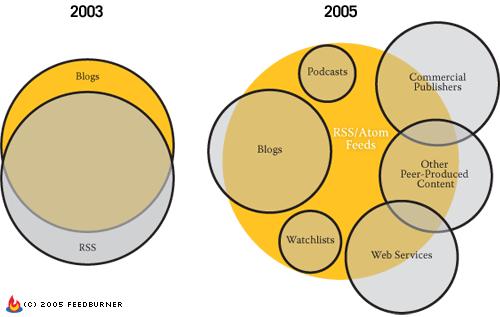
Wednesday, November 30, 2005Blu-Ray and HD-DVD Give Way : Enter Holographics storageWhile there is a battle going on about the importance of the Blu-Ray vs. HD-DVD format war, companies including Turner have already begun to move towards holographic storage. DVD had a good 10+ year run,but the same timespan may not be available for the next upturn.Whichever format "wins" will only be the "best" for maybe 3-5 years as far as capacity as well as read and write speed go. The adoption seems to be happening faster than expected. Early versions of holographic disk storage store up to 300GB per disk, a computer disc about the size of a DVD that can hold 60 times more data with ability read and write data at 10 times the speed of a normal DVD. By 2010, the disks are expected to cost $100 each and store 1.6 terabytes (that’s roughly 1,600 gigabytes) each. Some expect to break the 1TB-per-disk barrier in the next two-three years. Suppport for HD-DVD or Blu-Ray may lose steam with rollouts like this being planned. I think that Blu-Ray and HD-DVD are both fighting a losing battle because holographic discs are pretty close. Blu-Ray and HD DVD are looking to satisfy a couple of needs: more space (related to storing and retreiving movies), high definition (which most people cannot fully use), and tougher encryption (pet theme for movie studioes). The complications galore – In the interim for Blu-Ray and HD DVD to be successful, DVD, the most popular format today has to disappear. The movie studioes may need to stop releasing DVD’s to accelerate adoption of a different standard. Category :Emerging Technologies | The World Is Flat As An Extensible Wiki The World is Flat wins the first Financial Times and Goldman Sachs Business Book of the Year award. Thomas Friedman has a vision for the final edition of The World is Flat: anybody will be able to update it. He is looking at actually turning the book into an open-source product - like putting it up on the web like Wikipedia and let people manage it. It may be a concern for its publishers besides the risk that opponents of the book or its message about the benefits of globalisation will try to hijack the wiki edition. But it is a vision that is perfectly in tune with the picture of a globalised and interconnected world that Mr Friedman outlines. The rapid evolution over the past year of what is known as "Web 2.0" - a flowering of internet companies and strategies, based on the growing availability of cheap or free software online - has made it possible for budding entrepreneurs and big companies to experiment with strategies without having to "bet the firm". Enterprise Software & InnovationInnovation is not happening as much as it should in the enterprise software industry- Even on-demand is seen in some quarters as an extension of what was getting done in the past. Most of us feel strongly about it– read Vinnie Mirchandani's perspective on this- similar is the case in the opensource world as well. Most of the software sale that we get to see are incremental sales/minimal functionality extension – we do not necessarily see new waves in adaptation of enterprise software. I strongly believe that SOA & composites would force structural changes and unleash innovation whereby software will be described as a portfolio of capabilities and possibilities instead of modularized applications. Data models will be standard-based and externalized to enable interworking between services, and data will be considered to be like any other form of "digital content" ever ready for exchange and transformation between systems. Grady Booch points out that in the enterprise space, a considerable amount of innovation is happening in two dimensions: Category :Innovation, Enterprise Software, Emerging Trends. | Tuesday, November 29, 2005Writley To Word Would Be Like Hotmail To OutlookThe innovation that is happening in the personal computing space is amazing. Brian Livingston points to the fact that the days when Web browsers made you wait just to update the screen are ending. Today a Web page can be just as responsive as any program you run on your PC. The biggest upheaval AJAX will cause will be new powers in word processing, especially for documents that different people must write, edit, and approve. Microsoft Word has long enabled co-workers to insert comments into draft documents. And collaborative environments such as Microsoft's SharePoint Services are making possible "shared workspaces" so multiple individuals can simultaneously edit documents safely. None of these methods, however, are as simple to set up as a standard Web browser, which can quickly access a file from anywhere in the world. That's the promise that AJAX brings to the party. InetWord is a Web-based way to efficiently edit HTML files and office documents. One of InetWord's most serious competitors is another AJAX tool named Writely. In its current beta stage, Writely allows anyone to register for a free account and start uploading files. The document's creator can give editing privileges to any number of other people. The service is optimized for editing HTML files, but you can also upload Microsoft Word and OpenOffice files, which are converted on the fly into HTML format.Best of all, editing by multiple individuals is supported by Writely in real-time. There's no risk that edits made by one person can wipe out the changes made by another. InetWord focuses on sharing document with yourself and by hosting a file, allowing the user to edit from multiple locations, while Writely is more focused on dynamic collaboration. Writley shall be word what hotmail was to outlook. If you work with other people to create, edit, and approve documents, Web-based applications like Writely now offer an alternative to in-house content-management systems. Look at the comparison post on online word processors. .Category :Ajax | The End Of Copyright & Changing Role Of IntermediariesGamasutra thinks that we are witnessing the beginning of the end of a major era in world history. It may take fifty years, it may take a hundred, but the age of copyright is drawing to a close. This is not about the google controversy. While not sure if a world without copyrights is a good thing or a bad thing, but it’s inevitable. With Guttenburg’s printing press, the concept of intellectual property was born. Over the next two centuries or so, copying books went from being high praise to being a crime. When photocopiers became commonplace - when enough people feel that it’s OK to do a thing, that thing ceases to be wrong in their own cultural context. The Fair Use doctrine evolved with respect to copyright materials. The law changed. It’s now OK to photocopy parts of books for educational, non-commercial use. In effect, the authors and book publishers had to give some ground in the face of the overwhelming tide of public opinion. There’s no intrinsic reason why someone should continue to get paid for something long, long after the labor they expended on it is complete. Architects don’t get paid every time someone steps into one of their buildings. They’re paid to design the building, and that’s that. This is the age of new techniques. Travesties like the Digital Millennium Copyright Act don’t promote the progress of science; they actively discourage it. So do software and biotechnology patents. The patent system was intended to allow inventors to profit for a limited time on particular inventions, not to allow huge technology companies to put a stranglehold on innovation by patenting every tiny advance they make. The lawsuits, the spyware, the DMCA: these are the death struggles of an outdated business model The urge to create is too strong in all of us, and consumers will always be willing to pay for novelty and for excellence. These methods may not matter. It may mean that nobody gets mega-wealthy any more. What it does mean for sure is that the giant dinosaurs that currently dominate the distribution channels had better learn to adapt or die. Nicholas Carr highlights that far from experiencing disintermediation, business is undergoing precisely the opposite phenomenon - hypermediation. Transactions over the web, even very small ones, routinely involve all sorts of intermediaries, not just the familiar wholesalers and retailers, but content providers, affiliate sites, search engines, portals, Internet service providers, software makers, and many other entities that haven't even been named yet. These middlemen need to look at new models - It's no coincidence that the most profitable internet businesses - eBay, Google, Yahoo - play intermediary roles. They've realized that, when it comes to making money on the web, what matters is not controlling the ultimate exchange (of products or content or whatever) but controlling the clicks along the way. That's become even more true as advertising clickthroughs have become the main engine of online profits. |Apple Mac Mini As The Digital Hub Think Secret speculates that Apple's Mac mini will be reborn as the digital hub centerpiece it was originally conceived to be. The new Mac mini project, code-named Kaleidoscope, will feature an Intel processor and include both Front Row 2.0 and TiVo-like DVR functionality.Following the expectation that apple iBook may host intel chips, comes the next one - The new Mac mini is also said to sport a built-in iPod dock, a feature that was scrapped from the Mac mini Apple first introduced one year ago. The Mac mini may be positioned as the living room command center. Apple’s Front Row 2.0 and Apple's DVR application are likely to be a "TiVo-killer." Apple's media center intentions have become startlingly clear in the past year since Apple first delivered the Mac mini and customers first started connecting the system to home theaters and installing it in automobiles. With the hardware, software, and iPod sales behind it, Apple now seems poised to firmly plant its footprint in living rooms. Category :Mac Mini, Emerging Trends | Software Services : Trust & MoralityAlex Bosworth writes, as the software industry changes from shrink wrapped product development to a service model, not only does the model for developing and distributing software change, but also the model for how a company must conduct itself changes.He points out that every search, every click, the time spent lingering on a photo, the choice of wording and revision in an essay, the pattern of trips taken, the record of purchases made are all easily captured and stored forever by a web-service. Unlike the user of a packaged software product, there is very little control a user of a web-service has over this data collection. GMail may appear to delete email when 'trashed', but closer inspection reveals no firm guarantee the email ever disappears from their data centers, and certainly not at the time a user clicks delete forever. Detailed personal data that lasts lifetimes, bits don't have a built in expiration date. He points to TiVo users complaining about about embarrassing profiles. Software services have increasing potential to profile and people on a much grander scale than what television a person might want to watch.Rogue nations can profile and target people for imprisonment or reprisal based on web-service data mining as Google has the potential to deliver personalized advertisements. Social software offers a new degree of concerns, as these aim to graph your entire network of friends and acquaintances. Suddenly services don't simply know as much information about you as you release yourself, they also know what your friends think about you and information about them as well. Social software is at such an early stage, it's hard to think of all the abuses this information could create, however abuses of this information trust already exist. Sony slipping DRM rootkits on their CDs can erase a lifetime of good will. The only way to restore or create trust is by over time and repetition creating a pattern of ethical decisions. Look at RFID privacy related issues, online tracking facilities, spyware – we are indeed in a cocooned web world. James Governor points to the customer respect report and notes that IBM, SAP, Microsoft and not one of the Web 2.0 leviathans, Google, Yahoo, eBay is on the list as "excellent" & wonders whether or not customer respect is not an essential part of a succesful online business model!!.Surprising considering the fact that an the list looked different an year back. The most important thing for services and users of services to realize is that trust is an extremely valuable commodity that is hard won and easily lost. Category :Trust & Morality | Sunday, November 27, 2005Our Brave New World – The World Of Platforms & Process Supremacies Charles and Louis-Vincent Gave, along with Anatole Kaletsky have written a brilliant and easily read 150 page book called Our Brave New World. Category :Platform Companies | Editors & Bloggers Control Part Of The Reader AttentionWe covered the advancement internet reach surpasses the reach of the radio.Chris Anderson says he does not read mainstream publications and anything relevant to his interests therein will be anyway pointed to by his regular blog reads .He does not think that the mainstream media value is lost; but external editors in the form of network of bloggers do a good job. He sees his job as an editor to be one of a pre-filter - & the bloggers are post filters. So mainstream editors just control part of the attention chain, but the wise crowd controls the rest. Category :News, Emerging Trends | Amazing Sense Of ScalesI digged this – A visual sense of various scales as published here. Category :Scale, Nature | Digg & Engadget Attract More Traffic Than Slashdot We recently covered Digg trying to catch up with Slashdot in terms of traffic. Category :Digging, Emerging Trends | Saturday, November 26, 2005P2P File Sharing, Long Tail & New Pricing ModelsChris Anderson points to a well researched paper by David Blackburn on the economics of P2P file-sharing,which amongst other things finds that it does indeed depress music sales overall. But the effect is not felt evenly. The hits at the top of the charts lose sales, but the niche artists further down the popularity curve actually benefit from file-trading. Blackburn finds that it is unrealistic to believe that the effects of file sharing are constant across all artists as the costs and benefits of file sharing differ with the ex ante popularity of the artist. This suggest that ex ante unknown artists are likely to see more positive overall effects of file sharing than ex ante popular artists are. By adopting an estimation procedure which allows for the effect to vary according to measures of artist popularity, file sharing has had strong effects on the sales of music. In particular, new artists and ex ante relatively unknown artists are seen to benefit from the existence of their songs on file sharing networks, while ex ante popular artists suffer for it.And while the average effect across artists is essentially zero, the average effect on sales is not zero, as more popular artists not surprisingly tend to have higher sales. Thus, this paper finds that file sharing has had large, negative impacts on industry sales and that the RIAA’s strategy of suing individual file sharing users has led to reduced file sharing activity and sizeable increases in sales. Furthermore, the differential effect of file sharing on the sales of artists of different levels of ex ante popularity has led to a dramatic shift in the distribution of sales among artists, as new and less popular artists are now selling more records while star artists have seen their sales shrink, compacting the distribution of outcomes). Chris points out that Blackburn does a little mathematical magic to simulate what would happen if file-trading were reduced by 30%. Artists who are unknown, and thus most helped by file sharing, are those artists who sell relatively few albums, whereas artists who are harmed by file sharing and thus gain from its removal, the popular ones, are the artists whose sales are relatively high. The Long Tail implications of this are pretty clear. For the majority of artists further down the tail, free distribution is good marketing, with a net positive effect on sales. Which is yet another reminder that the rules are all too often made to protect the minority of artists at the top of the curve, not most artists overall. To me, it looks like lot more financial sophistication is needed to get better returns on albums – we need to note that P2P file trading is not zero cost & the record companies ought to look for a different pricing model – charge premium for big names and sell at higher prices in the peak season ( Blackburn notes that the sales of recorded music appear to follow decay patterns and seasonality patterns similar to those of motion pictures) – the first few weeks upon launch & as a comment in anderson’s blog noted , there is a greater case for record companies to look into dramatically cutting the prices for tracks in the long tail. Does the same apply to Bollywood films - not directly as Bollywood films have different economic models - but the longtail patterns are distinctly felt. . Category :Long Tail, Emerging Trends | The PageRank Mechanism Revealed & The Birth Of Google.The Page Rank model(the closest parallel that I can think of in terms of reach and power is the Coke’s original formula) is indeed a very powerful framework – the benefit of which is felt by all in the web world but little understood. Earlier I covered John Battelle writing about the 1996 Sergey and Page's crawler configured from stanford homepage working outward. Inspired by citation analysis, Page realized that a raw count of links to a page would be a useful guide to that page's rank. He also saw that each link needed its own ranking, based on the link count of its originating page. But such an approach creates a difficult and recursive mathematical challenge - you not only have to count a particular page's links, you also have to count the links attached to the links. Together, Page and Brin created a ranking system that rewarded links that came from sources that were important and penalized those that did not. Page and Brin's breakthrough was to create an algorithm - dubbed PageRank after Page - that manages to take into account both the number of links into a particular site and the number of links into each of the linking sites. Category :PageRank, Google, Emerging Technology | Friday, November 25, 2005Bill Gates On Microsoft Research Direction & Edge Bill Gates in an interesting interview with Informationweek talks of a various issues centered around Microsoft Research. Excerpts with some edits and comments: Category :Microsoft ,Emerging Trends, Emerging Technologies | Jim Collins On Peter Drucker Jim Collins has written a very small but sweet piece on Peter Drucker. Excerpts from the article: Category :Drucker | Bihar : The Trendsetting ChangeShekhar Gupta sees the just concluded Bihar election as a forerunner of a major change about to happen in the polity of India . He writes that politics in India is in grave danger of being trivialised by yet another factor—psephology. If every electoral verdict were to be reduced to simple arithmetic, it would not only become dull and predictable, but also irrelevant. This Bihar election marks the arrival of an aspirational wave in the most backward Bharat where no more than 12 per cent of infants are immunised at birth, where birth rates are higher than the most backward countries of the world, and where per capita income is one-third of the national average and even one-sixth of some of the richer states of India. A resurgence of hope and aspiration in the Hindi heartland is an event to cherish and celebrate.The voter in Bihar is defining for all of us a welcome new notion of empowerment in India’s political heartland: social equality combined with religious tolerance, security, and economic upliftment and opportunity. Shouldn’t it be reasonable to believe that this very welcome infection will inevitably spread to UP as well? Category :India, Emerging Trends | The Auto Web 2.0 Validator Came across this site called web2.0 validator. Based on the thirty second rule, given an URL, the site validates and gives a score on web2.0 conformance. Popular sites like msn.com, google.com score 2 or 3 on a maximum of 16/17. The interesting thing about the site is that all the rules of web 2.0 are provided by users of this site. Some of the rules look downright funny : Category :Web 2.0 | Thursday, November 24, 2005Globalization & China: The Disappointed InvestorsI read during my flight out of Seoul, Newsweek’s very insightful article on how may global enterprises are forced to hedge their bets on china following massive investments and suffering extremely poor returns. A must read for all talking about the rise of china – to understand the nature of growth and investments that are happening in china. I can confirm that I am repeatedly hearing such stories all around( my initial surprise turned into realistic assessments to a certain sense of tiredness in hearing such views repeatedly) on investments made in china in my varied interactions. Category :Chindia, Globalization, Emerging Trends | Presentations : Form & Substance In the November edition of HBR, senior editor Gardiner Morse has an excellent piece - a brief forethought on “information graphics”. Morse takes on the circle and arrow drawing brigade influence in business circles to demonstrate the process and flow sequence. He writes,"Business communications are lousy with circle-and-arrow diagrams that range from the dumb to the deceptive". Morse eggs on presenters, readers and listeners to examine clearly next time when you find yourself preparing a circle for presentation, ask yourself if the process that you are describing really works the way you say it does and turning his attention to readers and listeners, the next time when a presenter touts a circle to make a point, find the bogus link and put him on the spot. Feedworld 2.0 & SSE Dick Costolo, CEO of Feedburner has an excellent post on how feeds will change the way content is distributed, valued, and consumed.From all feeds being derived from a blog,today,however,there are innumerable feeds that are unrelated to blogs. Commercial publishers have embraced feeds wholeheartedly; most web services and many search engines now provide subscribed results; and podcasts and videocasts are entirely feed-based while not necessarily tied to blogs. Category :Feed 2.0 | The US & The War For TalentWSJ writes that industrialized countries other than the US recognize the importance of human capital for economic growth, and they have ratcheted up recruitment of the world's mobile talent. Meanwhile, the U.S., the undisputed leader in attracting global talent, has erected barriers for skilled migrants and watches passively as they stay home or go elsewhere.America has seen the number of legal migrants, who tend to be more educated, fall by nearly a third over the past few years . Now is not the time to scale back foreign recruitment. The explosive growth of higher education in many developing countries, particularly in Asia, has caused a perceptible, if gradual, shift in the global talent pool. China and India are producing more engineers than all industrial countries combined. Larger developing countries have new opportunities to attract jobs for skilled workers and keep them at home. Today's skilled jobs are increasingly service jobs, and, unlike manufacturing jobs, service work is skill-intensive rather than capital-intensive. With the rising educational attainment in many developing countries, and the low capital costs of outsourcing service labor, developing countries have an emerging competitive advantage. Foreign talent has helped make the U.S. economy the world's most productive and innovative. Time spent in the U.S. by foreign citizens has also been a crucial means by which American values and institutions have been transferred around the world. Raising barriers to talented foreign students and workers might yield short-term political gains, but the long-term economic consequences will be much less salubrious. While the concerns are obvious and well thought out,recently elaborated by Richard Florida so tantalisingly - I do not know of any other country in the world which can absorb immigrants in the scale that the US traditionally does and there are not many societies outside of the US that can be so open minded and welcome immigrants and allow them to seemlessly fuse into local ethos. Category :Immigrants, Talent. | SaaS, SMB & Enterprise Adoption Amy Wohl sees most traditional software vendors have positioned SaaS mainly for the SMB market, primarily for two very good reasons: Category :SaaS | Tuesday, November 22, 2005Cisco : IP Vision In This Convergent WorldWith this acquisition, Cisco muscles into the STB market, and gearing to get into the home networking as well. There is now no competitor with matching reach and skill base like Cisco. Cisco already has great Storage Networking technology in-house, modulating and re-aligning may be a challenge, but reality is that in this changing digital life, consumers would want to view, listen, communicate over varied mediums covering almsot all digital gadgetries at home as well.The services can be extended to support a lot more features. The STB segment is a very important niche, with potential to grow manifold times in the coming years & Cisco has certainly done a great job in identiifying the space and is all set to become a significant player here. As News.com captured it so well - for a long time Cisco has been talking about network convergence, the idea that data, voice and video traffic will one day travel over a single network. The vision has already come to fruition within the carrier's network. Most cable operators and phone companies carry their internal traffic over an Internet protocol, or IP, network that uses Cisco routing and switching equipment. Now the trend is finally making its way into the home, as cable companies and phone companies start offering customers a triple play of services that includes high-speed Internet access, telephony and, finally, video-all over an IP network. We covered Geoffrey Moore's View on Cisco's future from his perspective where he rightly predicted that the options for Cisco as: Category :Cisco, IP Vision, Digital Home | Wikipedia In Top Ten SitesSteve Rubel points to Nov first week Nielson Ranking of news sites and finds Wikipedia there - and that's a first for any open citizen-powered site - truly interesting. I was a little curious and went to Alexa to check on compartitive traffice of other popular sites and found that Cnet.com has caught up with about.com in traffic. Category :Rankings | Open Source: Economics & InnovationClosely following Larry Augustin’s views on opensource, Marc Fleury writes that the business model of software MUST include R/D. He sees that FOSS development models are economically sustainable, have lower expenses associated with them, specifically in the QA arena and that for-pay licensing-based software, while greatly profitable, can be undermined by cheaper models. Marc who earlier wrote about VC investments in open source now writes that JBoss sees FOSS is about a better way to develop, distribute and support software. Today's software have tons of room to grow in terms of technical maturity, the economarket dynamics have tightened since the bubble forces The dirty little secret of the enterprise software model in today's maturing market place is that, with the notable exception of a few players , the days of the hugely profitable sotware license are gone. In With the traditional software development model, your cost of sales, marketing and distribution is so high that these models completely depends on the for-pay license. An optimally functioning FOSS business model needs 20 cents of sales and marketing to acquire 1 dollar of maintenance, where a traditional software company will have to spend around 2 1/2 dollars. Professional FOSS businesses can sustain sales and marketing costs out of the maintenance revenue stream. This model produces earnings (EBITDA) according to the P&L of stable software business models, those in mature subscription-based phases. The P&L of these business sustain R&D of 20%, where we are today at JBoss. Thus Professional FOSS, in theory and practice, sustains the research and development expenses associated with the classic business model. On innovation as a proof point, JBoss and the FOSS community in Java have been pushing the frontier with EJB3, annotations, light-weight containers, IoC, SEAM etc and a lot more in the pipeline. The days of fat profits in licenses may be gone but software is moving ahead, as vibrant and innovative as ever. Look at where Jboss mostly operates in the enteprise layer - the answer lie there. Category :Opensource | Paul Graham On Web 2.0Paul Graham thinks that he does not see any deliberate plan to suggest there was a new version of the web in naming it as Web 2.0. Some views are better read without any inference thrown in - Paul's writing are always like that. Excerpts : The proponents just wanted to make the point that the web mattered again. It was a kind of semantic deficit spending: they knew new things were coming, and the "2.0" referred to whatever those might turn out to be. The 2005 Web 2.0 conference reminded me of Internet trade shows during the Bubble, full of prowling VCs looking for the next hot startup. I wouldn't quite call it "Bubble 2.0" just because VCs are eager to invest again. Pointing out that the Internet is a genuinely big deal. The bust was as much an overreaction as the boom. It's to be expected that once we started to pull out of the bust, there would be a lot of growth in this area, just as there was in the industries that spiked the sharpest before the Depression. The reason this won't turn into a second Bubble is that the IPO market is gone & Venture investors are driven by exit strategies. The reason they were funding all those laughable startups during the late 90s was that they hoped to sell them to gullible retail investors; they hoped to be laughing all the way to the bank. Now that route is closed. Now the default exit strategy is to get bought, and acquirers are less prone to irrational exuberance than IPO investors. The startups are different this time around. They are to the startups of the Bubble what bloggers are to the print media. Graham concludes that as Google is a "Web 2.0" company – it shows that, while meaningful, the term is also rather bogus. It's like the word "allopathic." It just means doing things right, and it's a bad sign when you have a special word for that. Also read a related note here. Category :Web 2.0 | Travelling!!Too much of travel these days- On a trip to North Asia starting form Seoul. Updates may not be regular for a few days. |Monday, November 21, 2005The End of Process - No Way Ross Mayfield asks that if a knowledge worker has the organization's information in a social context at their finger tips, and the organization is sufficiently connected to tap experts and form groups instantly to resolve exceptions - is there a role for business process.Quoting Clay Shirky "process is an embedded reaction to prior stupidity", he adds that there was an exception to process and an expert designed a way for people to work together in one context that should fit all prior contexts. The problem is, the process becomes calcified and accepted as the rule. After all, it's a rule, and in corporations we follow them, even if it fails us or simply doesn't make sense. Because of constant change in our environment, processes are outdated the immediately after they are designed. The 90s business process re-engineering model intended to introduce change, but was driven by experts which simply delivered another set of frozen processes.Claiming some some staid corporations are abandoning process all together,he believes that at best a process should serve as a reference model - something that others can reference when completing a task & can be leveraged for innovation, a boundary condition for experimentation at the margin and concludes that the first organizations bringing it to an end will have a decided competitive advantage. Category :Process | Sunday, November 20, 2005Congrats Jim On Winning The Stevens Award Due to my intense travel – missed noticing this important award announcement – Jim Highsmith winning the Stevens Award. Jimis Director of Cutter Consortium's Agile Software Development & Project Management practice and is a Fellow of the Cutter Business Technology Council, which prepares the Opinions for Cutter's Business Technology Trends and Impacts service. Category :Awards | Youth, Technology & Connected CocoonsIn my visits to atleast twenty different national capitals in the part of the year that has gone by; it is almost impossible not to notice that the young people are in a race with each other to embrace technologies faster – not surprising in this iPod generation & presence era,given that technology can only improve,the trend is irreversible. Instat recently reported that the youth market in the Asia-Pacific region is becoming a significant driver for growth in the region’s mobile phone market. Around 10-15% of all youth disposable income is spent on mobile products in developed countries, displacing spending on traditional youth products like clothing, toys, and comic books, etc., the high-tech market research firm says. In the Asia-Pacific region, spending by youth on mobile data is estimated to grow at 15.3% annually from 2004 to 2010. Category :Mobility, Technology | Saturday, November 19, 2005Microsoft Intensifies Ajax Efforts Ajax, a conglomeration of technologies that cover everything from presentation and object modeling to data interchange and retrieval is attracting wide attention.Microsoft thinks Ajax apps are too hard to build, and the company's Web platform team is trying to demystify Ajax with the development of an easier-to-use Ajax-style programming technology code-named "Atlas" that it's planning to bring to market during the first half of 2006. Look at Adam Bosworth talk about Ajax. A prototype of the technology is available here. Brian Goldfarb, Microsoft's product manager refuting the claim that Microsoft is unready for web 2.0, shares some inside perspectives on Ajax. He sees that there are two important things happened recently to revitalize interest in Ajax. Category :Ajax,Emerging Technology, Microsoft | Google-Mart : Wal-Mart Style Domination In Web 2.0 World Bob Cringely thinks that Google may not be interested in operating systems but could be playing to its strengths and could effectively take over the internet. All by seducing, he says. Dismissing Google’s interest in becoming a Super ISP, Bob writes,its interest in fibre could be for building Googlemarts – these containers could host within thousands of opteron processors and many petabytes of data & the idea is to plant one of these puppies anywhere Google owns access to fiber, basically turning the entire Internet into a giant processing and storage grid and adds these may be placed at around 300 locations which serve as the Internet peering points globally.They get Google closer to users, reducing latency. They offer inter-datacenter communication and load-balancing using that no-longer-dark fiber Google owns. But most especially, they offer super-high bandwidth connections at all peering ISPs at little or no incremental cost to Google. Category :Emerging Trends, Google | Apple & iBook LaptopsWe recently wrote that Apple's move to Intel marks a tectonic shift for Apple, which has used processors from IBM and Motorola throughout the life of the Mac. However, the company has changed architectures before, shifting in the 1990s from Motorola's 68000 family of chips to the PowerPC architecture jointly developed by IBM and Motorola. Think Secret speculates that Apple is planning to release its first entry-level iBook laptops with Intel processors next January. While not sure of what processors or price points the new models will debut at,it is thought Apple will expand the iBook line with one additional model and will lower prices - to entice current Windows users and prove to the market it will be more competitive with the likes of Dell, Gateway, HP and Sony. It is more likely the initial release of products with the new processor will be consumer-based products only and not professional, high-end lines, such as PowerBooks and towers, as some Web sites have reported. Apple will almost certainly tap Intel's forthcoming Yonah processor for the iBooks, a successor to the company's Pentium M. The dual-core Yonah chip could very likely deliver performance greater than Apple's current G4-based PowerBooks. Rolling out a consumer system like the iBook as the first Intel Mac also makes sense from a software development standpoint. Analyst Stephen Baker at NPD Intelect believes for Apple, they need a nicely configured $699 notebook to be competitive at the entry level he said. "They can play up the value of the bundled software and Mac OS X and really have a strong case for consumers to buy their product & notes the intensifying competition in the consumer notebook market. While launching Tiger recently, I wrote that clearly this move adds to the Mac's general superiority over typical Windows computers as the best choice for average consumers doing the most common computing tasks. There’s no doubt that Apple's move to Intel could usher in a new era of success. While on this do not forget to read the misconceptions regarding the so called Apple-Intel Deal. Category :iBook, Apple, Emerging Trends | Friday, November 18, 2005Email : From Productivity Wonder To Maddening Time WastenerWhile covering the future of microsoft,I wrote that Wiki's, collaboration and the blogosphere all are certainly getting good traction at levels - all segments of enterprise and consumer included - and with the impending power of broadband and hosted models creating a new tapestry very different from what exists today. We also covered the definitive need for using proper email etiquettes to minimise email stress effect within organisations. We also covered the perspective that Email destroying the mind faster than marijuana. Businessweek writes that Email is stretching and morphing from a point-to-point medium into a broadcast Medium . The article points out that Gartner Group predicts that wikis will become mainstream collaboration tools in at least 50% of companies by 2009. Clay shirky predicts that while e-mail will remain the prime tool for notification and one-to-one communication, "a huge percentage of collaboration will occur outside of e-mail, with a continued rise in these other tools,". J.P.Rangaswami of Dredsner feels that there's an enormous untapped value to be gotten by getting collaboration right and adds that while email is not on its way to floppy disk-dom, it has certainly come under threat before. The Lotus Notes juggernaut of the early 1990s never displaced e-mail. Nor did attempts to build collaborative platforms during the boom, but e-mail has hit a wall, creating an impenetrable scale of conversations people don't need to be a part of and shipping around mounds of information they can't possibly digest. In the long run, perhaps the biggest death knell for e-mail is the anthropological shift occurring among tomorrow's captains of industry, the text-messaging Netgens (16-to-24-year-olds), for whom e-mail is so "ovr," "dn," "w/e (over, done, whatever)." Category :Emerging Trends, Email | |
| Sadagopan's Weblog on Emerging Technologies, Trends,Thoughts, Ideas & Cyberworld |